
Following Pippa
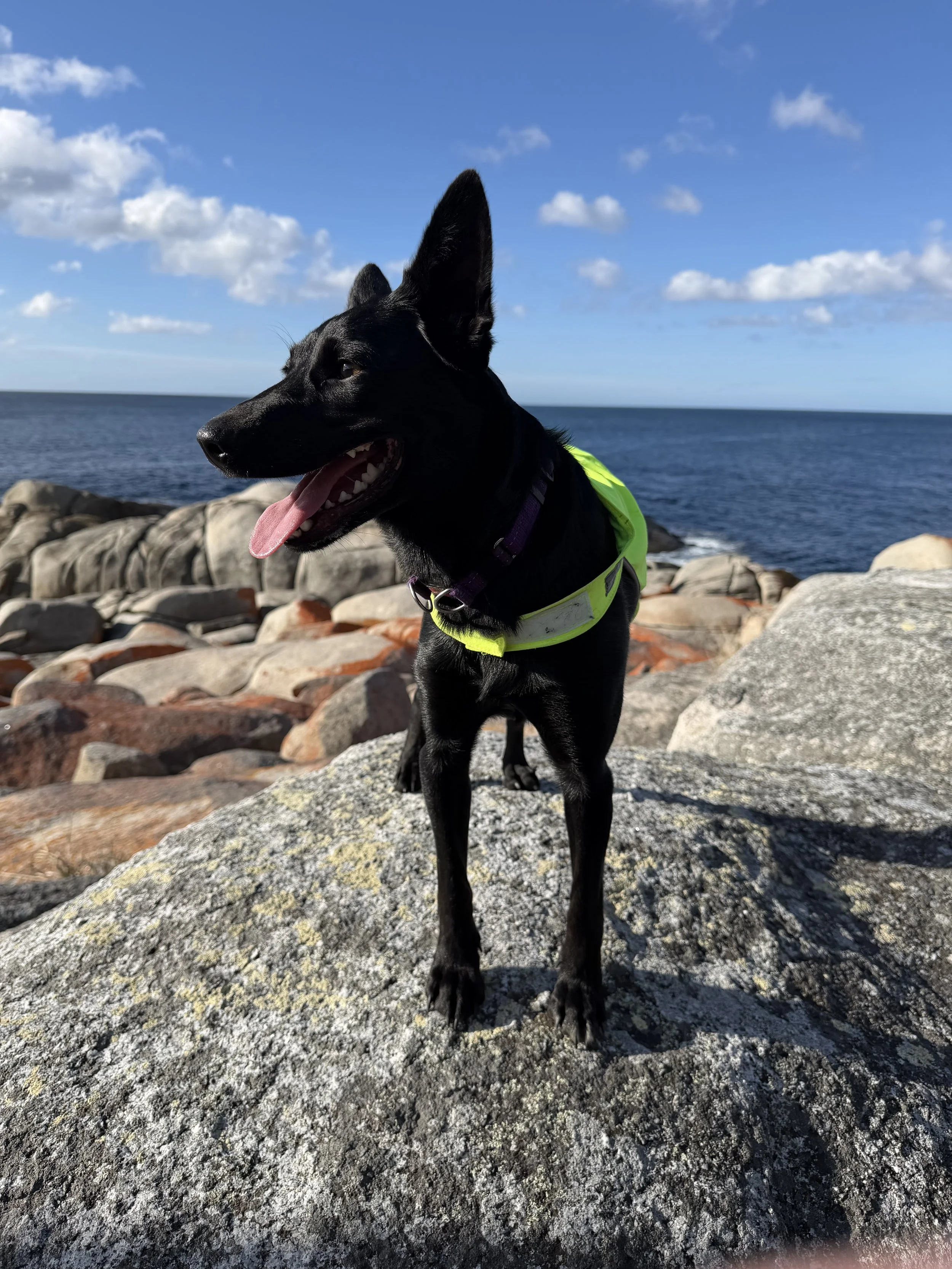
Pippa at her (and my) favourite place, Little Elephant Rock, Bay of Fires, Tasmania.
Some of my favourite field trips begin by surrendering the itinerary.
My young Kelpie, Pippa, has an endless appetite for running. Together we head out along the dirt tracks through Humbug Reserve, winding through the coastal bushland of St Helens Point and around Skeleton Bay. Rather than deciding where we'll explore, I often let her choose. She runs ahead, stopping, doubling back, catching a scent before charging off again. I simply follow.
Recently she led me all the way to Little Elephant Rock. By the time we arrived she was gleeful, and before long, so was I.
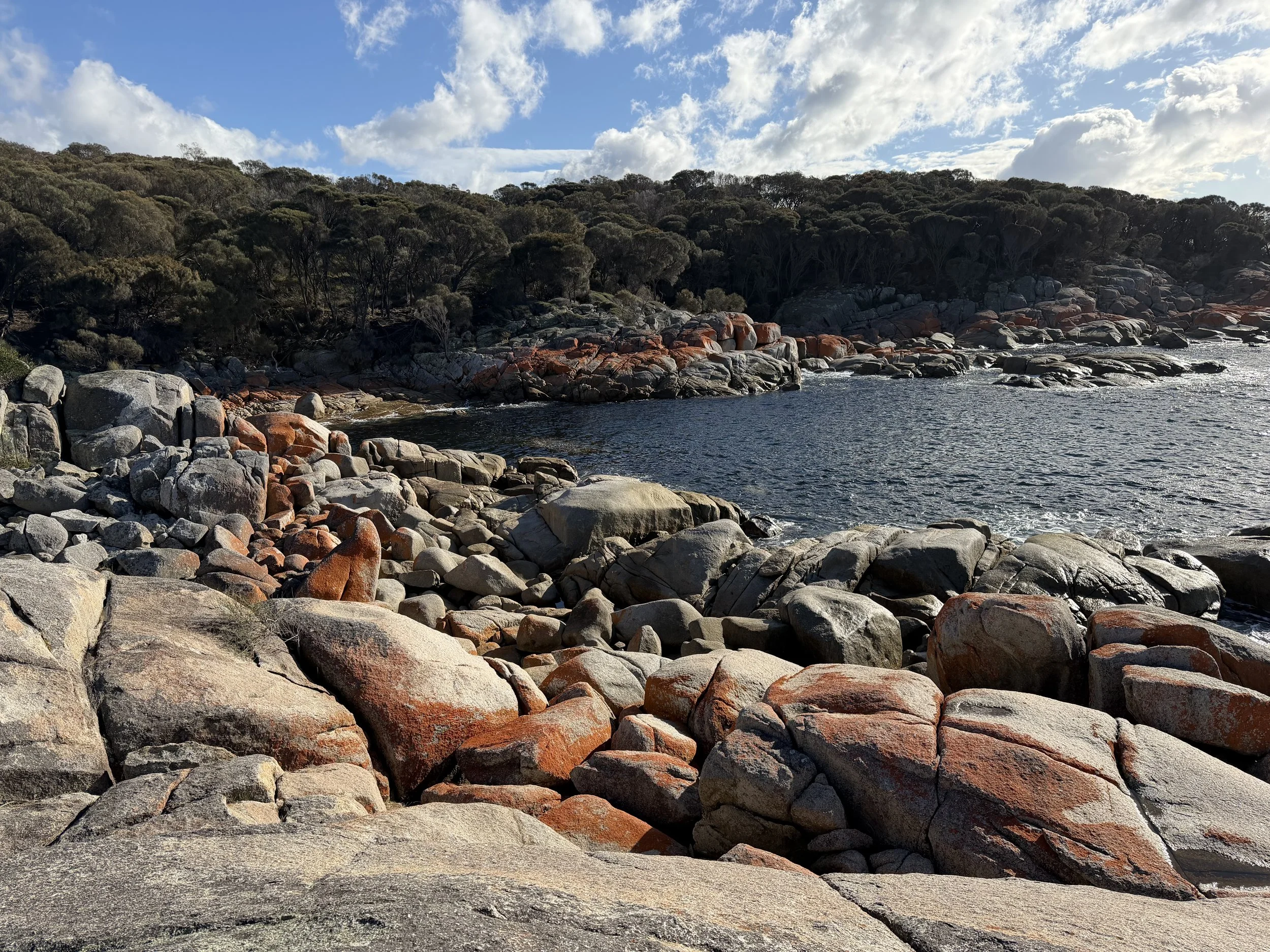
Granite boulders at the Bay of Fires.
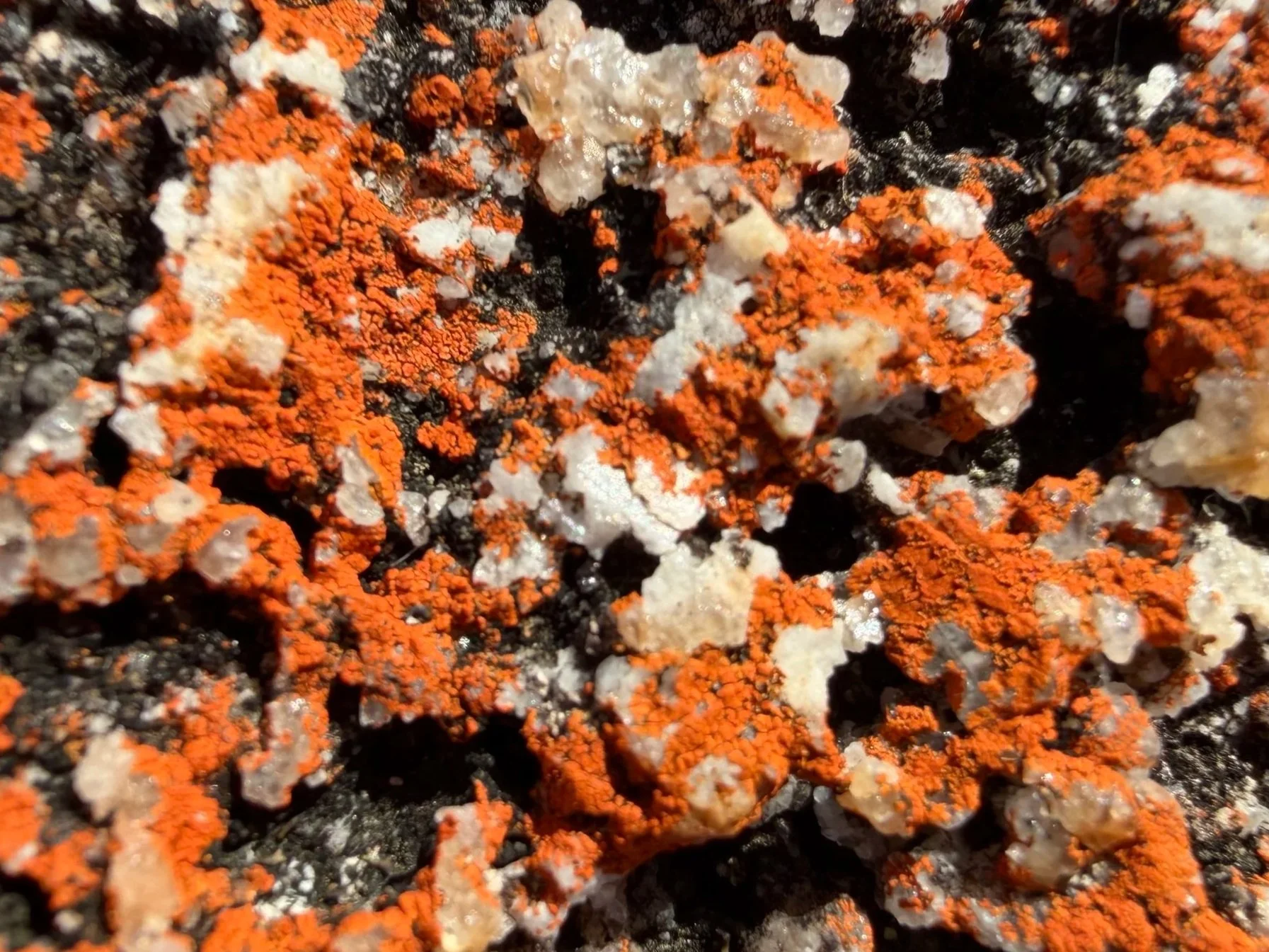
Zooming in on the orange lichen at the Bay of Fires.
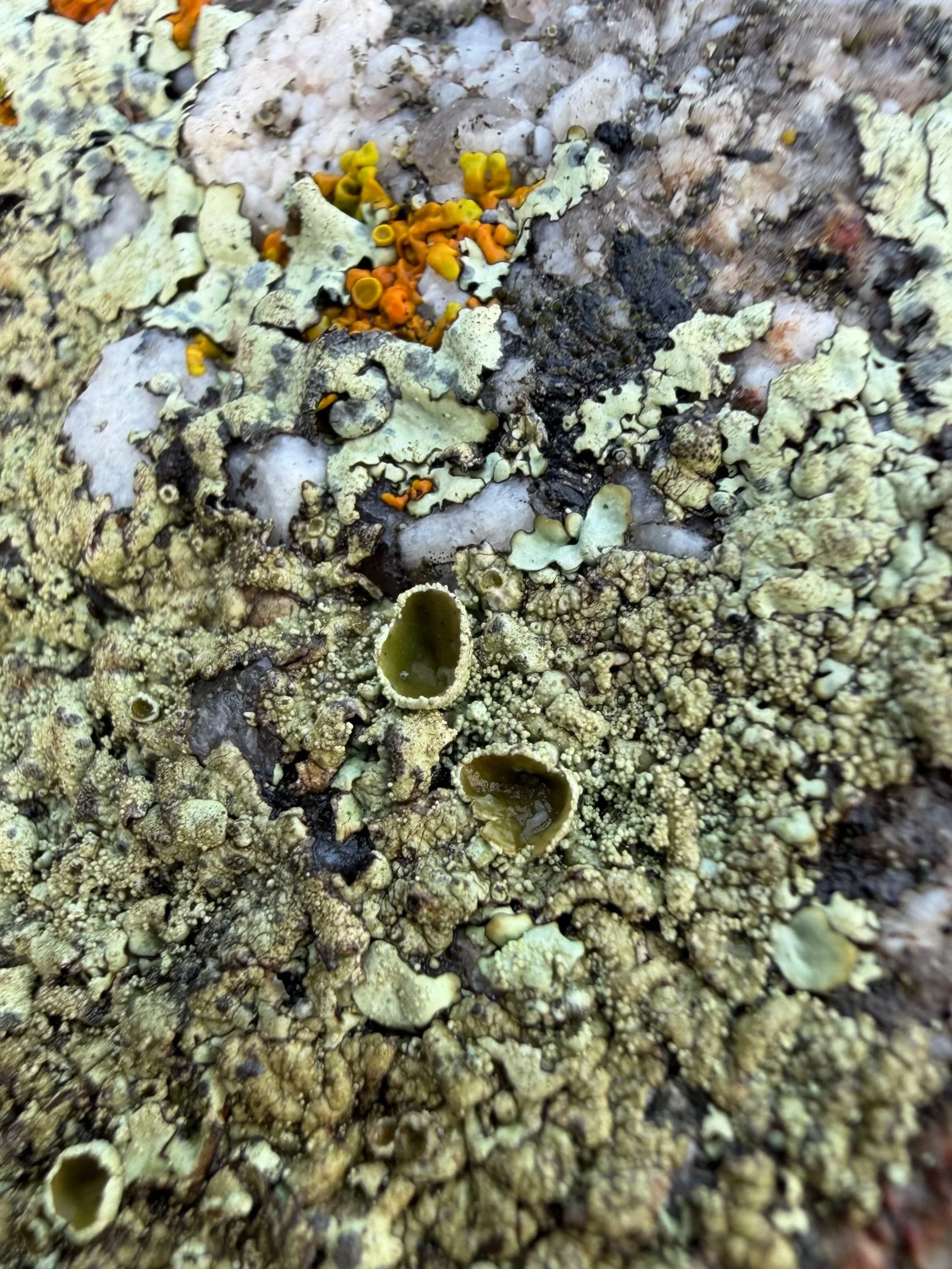
Sage-grey lichen covered rock at Little Elephant Rock, Tasmania.
While Pippa investigated the fresh scent trails of wallabies, I wandered across the enormous granite boulders shaped by wind, sea and time. Their surfaces carried familiar companions: pale sage-grey lichens spreading in quiet circles across the stone, interrupted by brilliant bands of vivid orange where salt spray reaches but the tide does not.
I've never quite found the right words for that soft green-grey of so many lichens. It is a colour all of its own.
The more I looked, the more the rock transformed. Tiny fruiting discs appeared everywhere. Forms that had seemed flat became intricate landscapes. Whole communities emerged from what, moments before, had looked like bare stone.
Lichens continue to fascinate me because they are not solitary organisms. They are households. Fungi, algae, cyanobacteria and bacterial communities living together, each contributing something the others cannot. Looking closely at them always feels like a lesson in cooperation.
A new phone with a much-improved camera became another way of paying attention. Magnified on the screen, details that my own eyes struggled to resolve revealed themselves with astonishing clarity. Every close-up photograph became another invitation to look again.
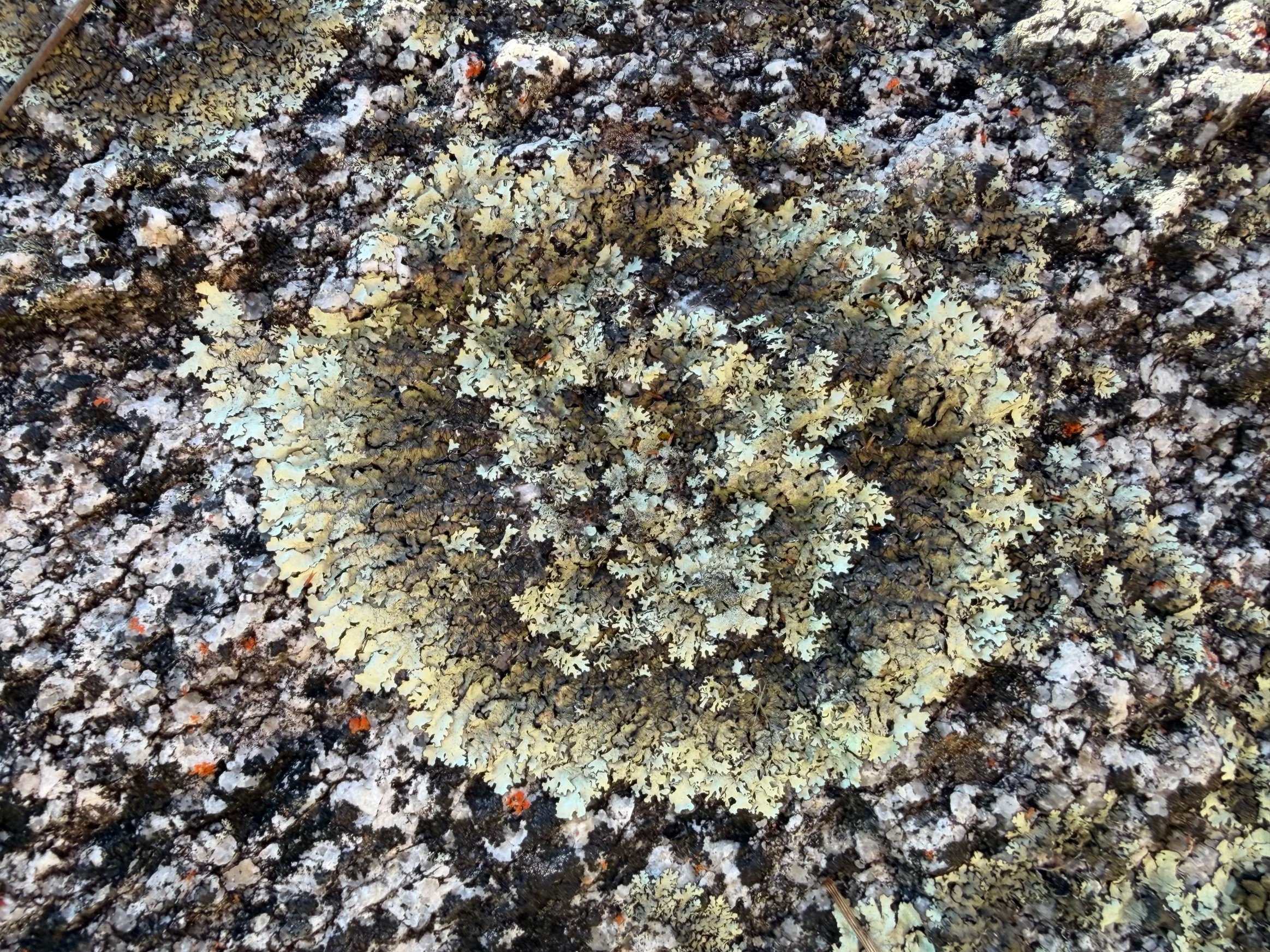
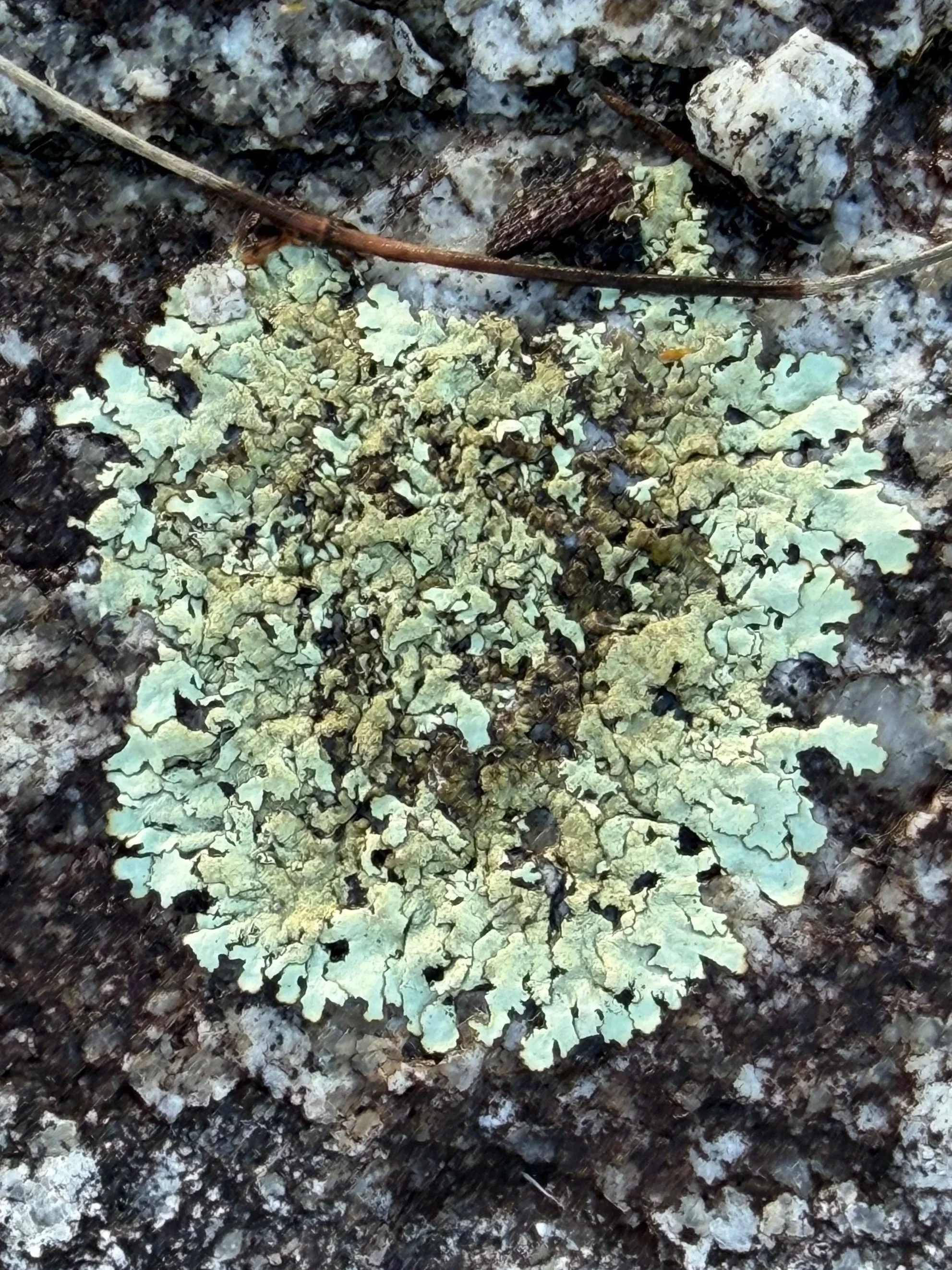
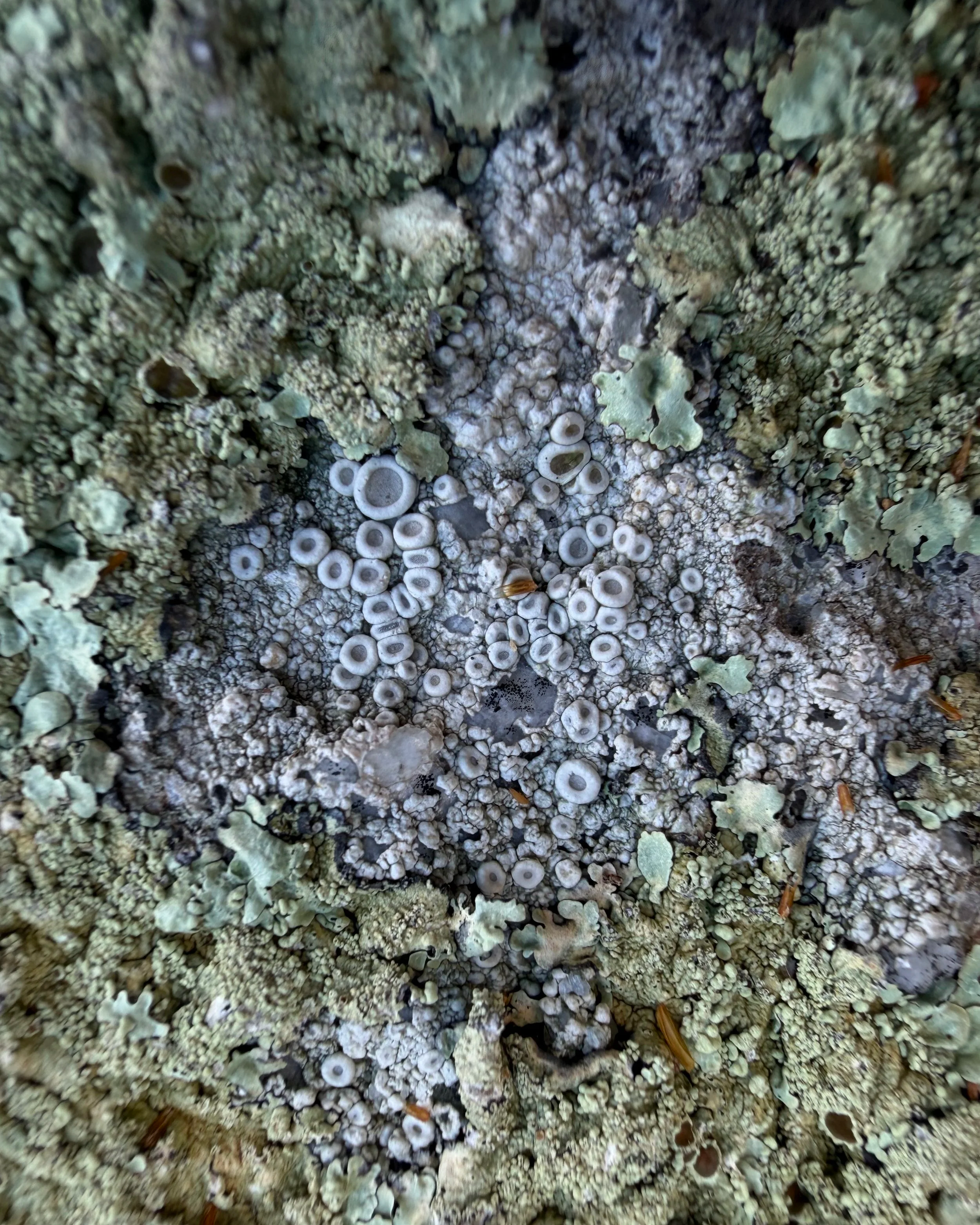
Rock lichens with their little fruiting cups.
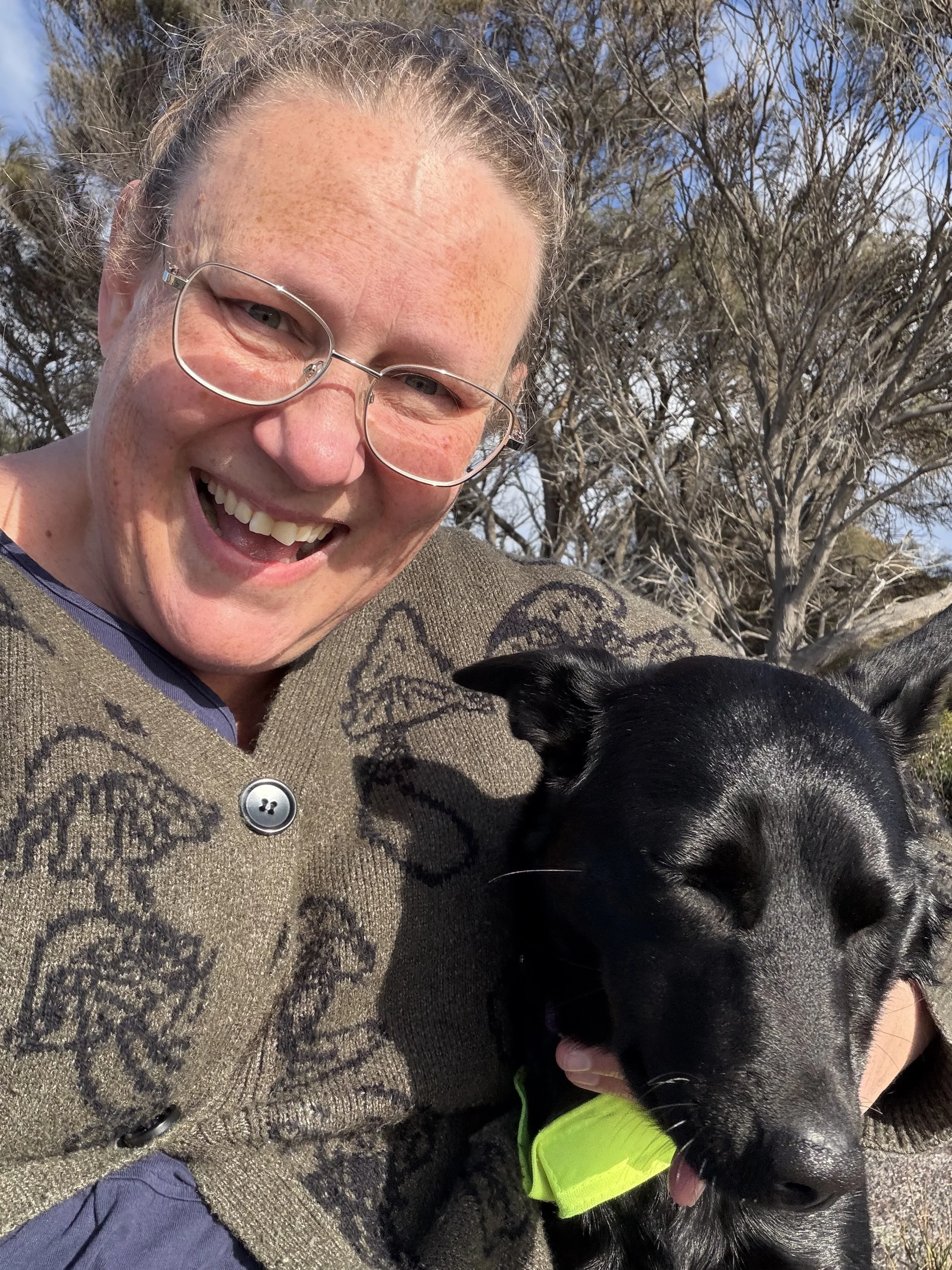
Pippa and Mumma selfie…one of us always has our eyes closed!
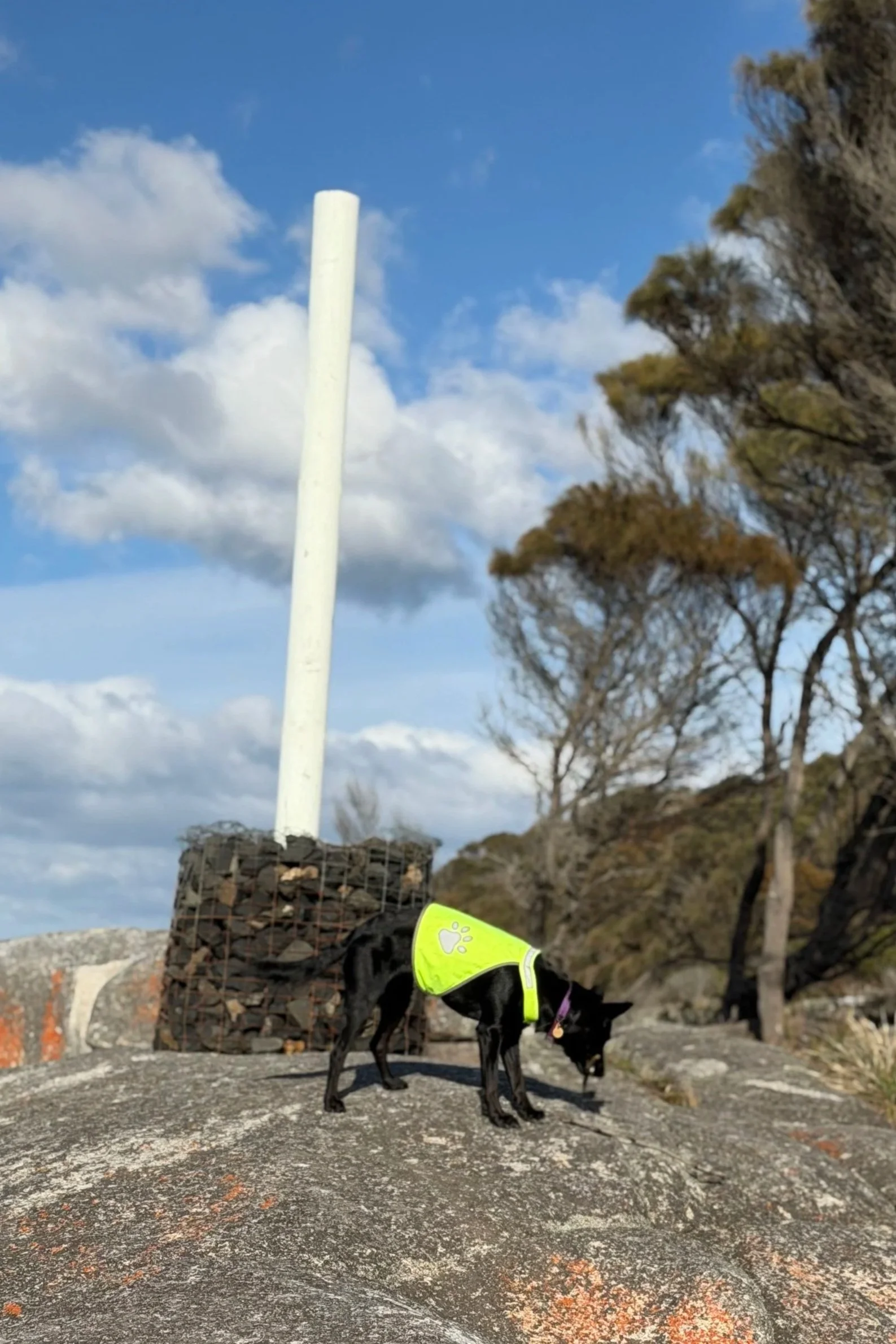
Pippa playing with her stick at Little Elephant Rock.
Out among the rocks, Pippa bounded effortlessly between the boulders carrying a stick she had proudly claimed. Following her playful route, I discovered a small fallen branch nestled in a crevice. It carried an exquisite colony of orange lichen, complete with tiny branching structures crowned by delicate discs. Nearby lay another fragment of pale green-grey lichen that had become separated from its community. Both had already fallen from where they once grew, and I tucked them carefully into my pocket to take back to the studio—not as trophies, but as teachers.
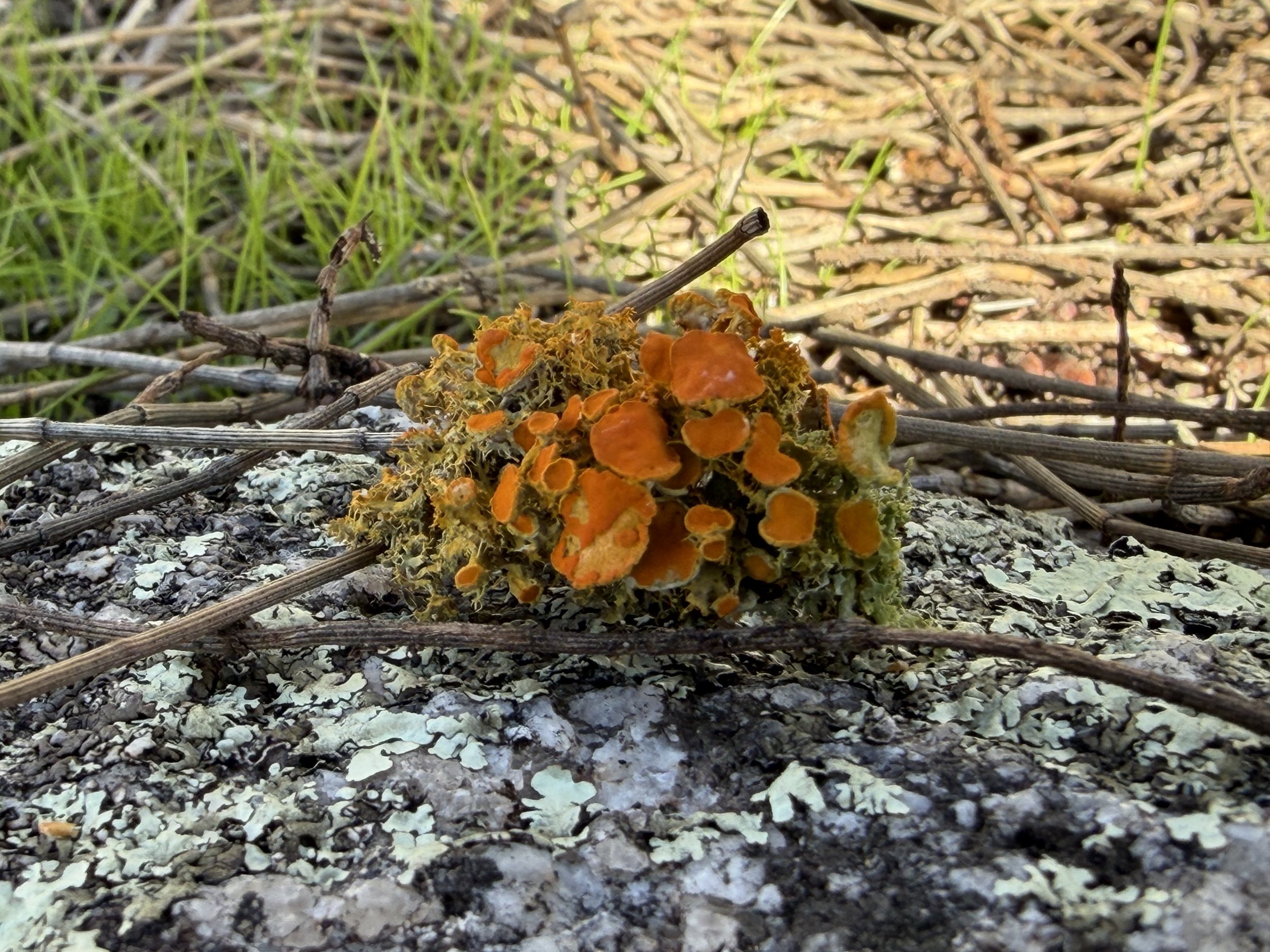
Vibrant lichen community, my teacher.
Further into the bush a fallen tree caught my attention. From its dry, weathered bark emerged mushrooms so small they were almost invisible. Only through the camera's zoom did they begin to reveal themselves. Once my mushroom eyes adjusted, I saw not one fruiting body but many, each with its own shape, colour and stage of becoming.
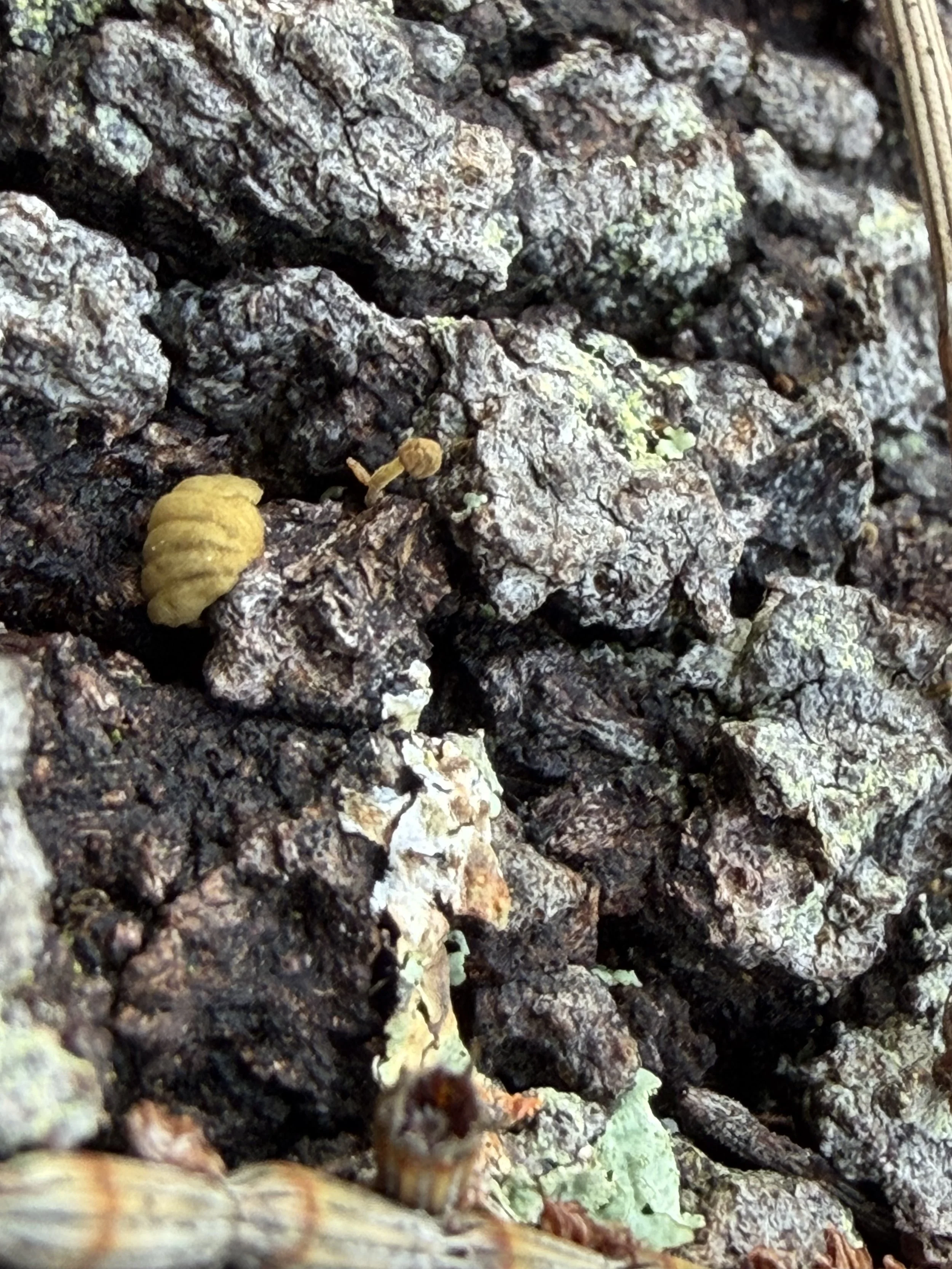
This teeny fungi was barely visible to my eye.
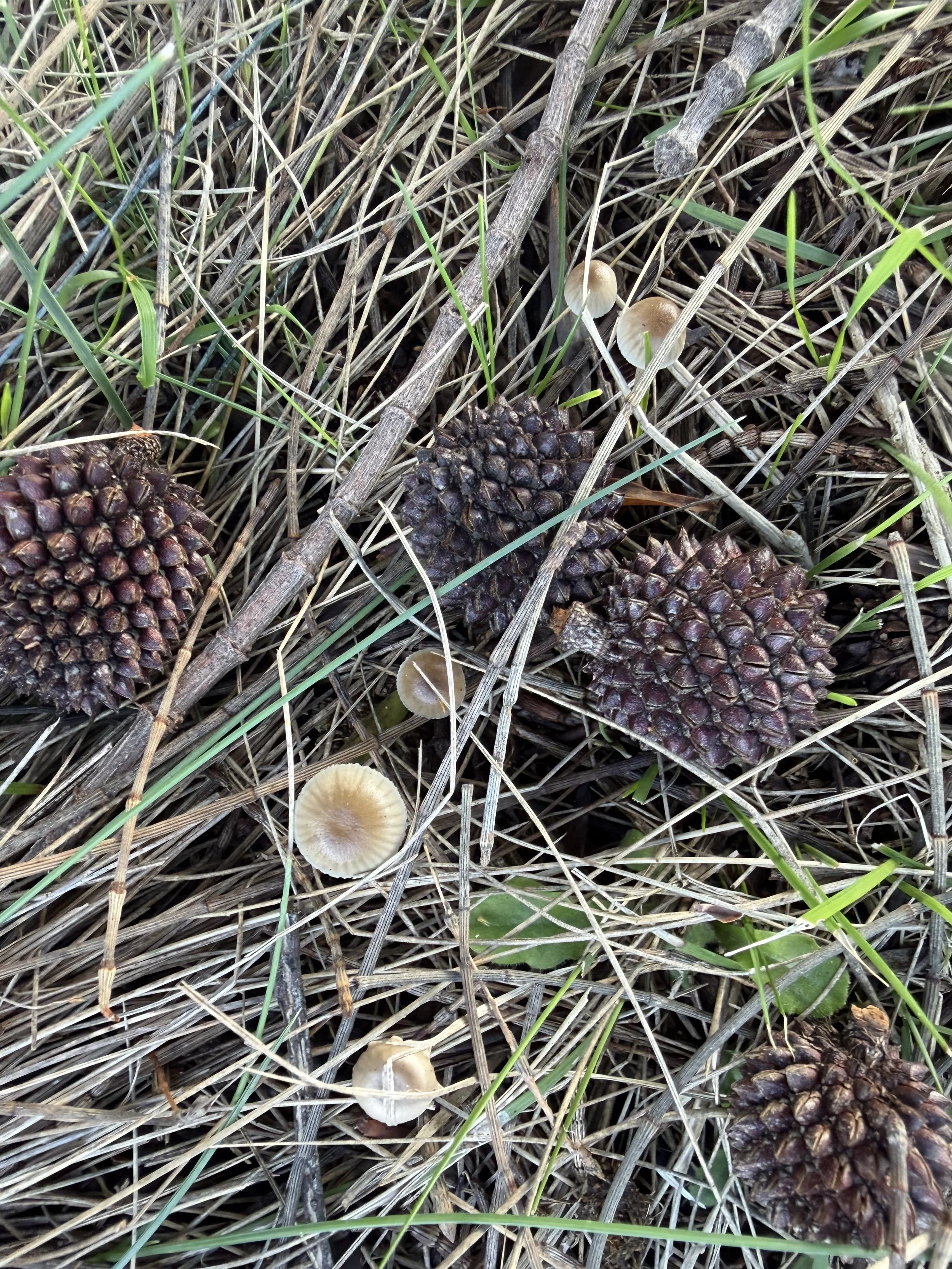
A small fungi family, connected underground by mycelium.
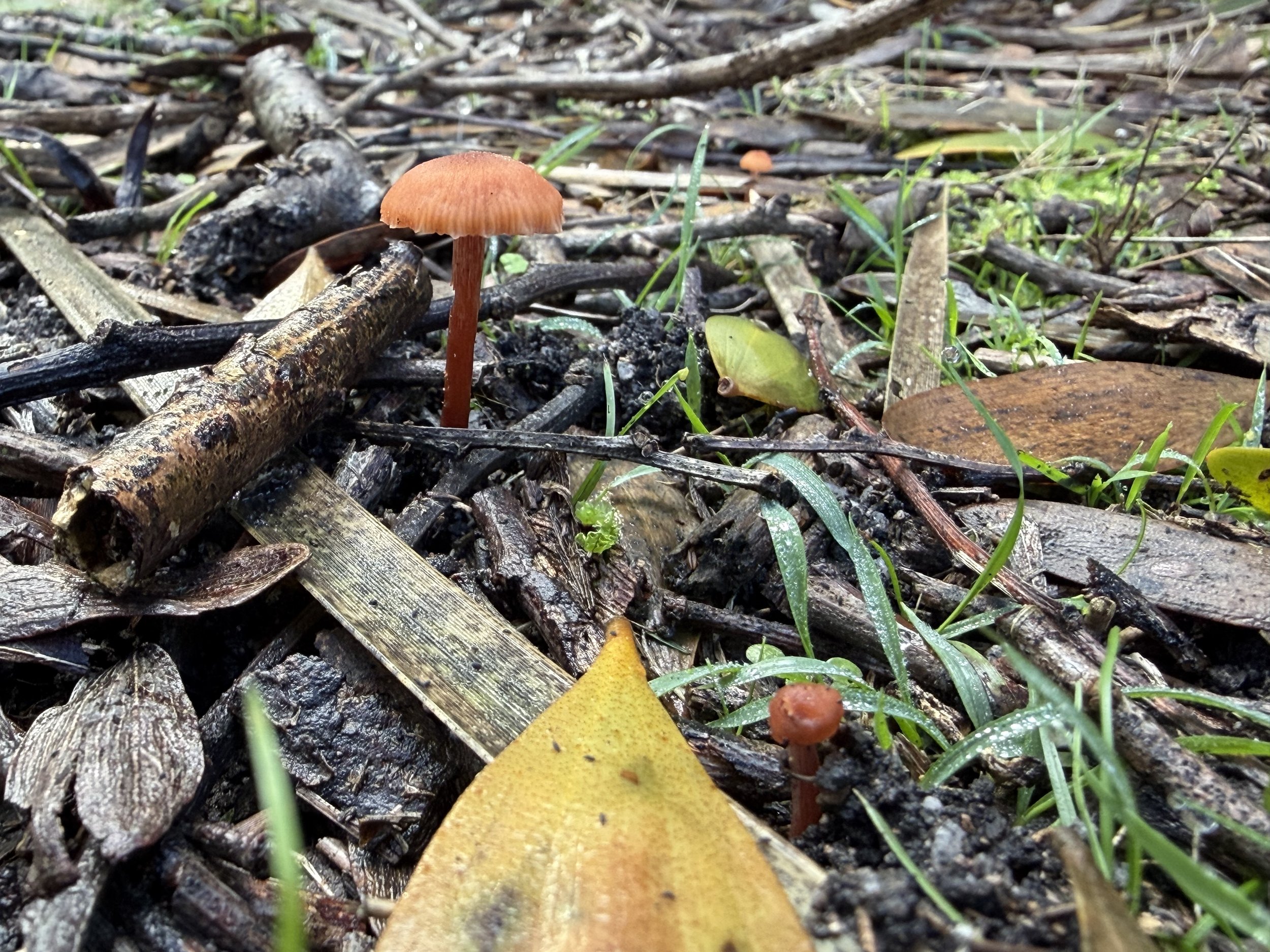
Orange brown mushrooms in the understory.
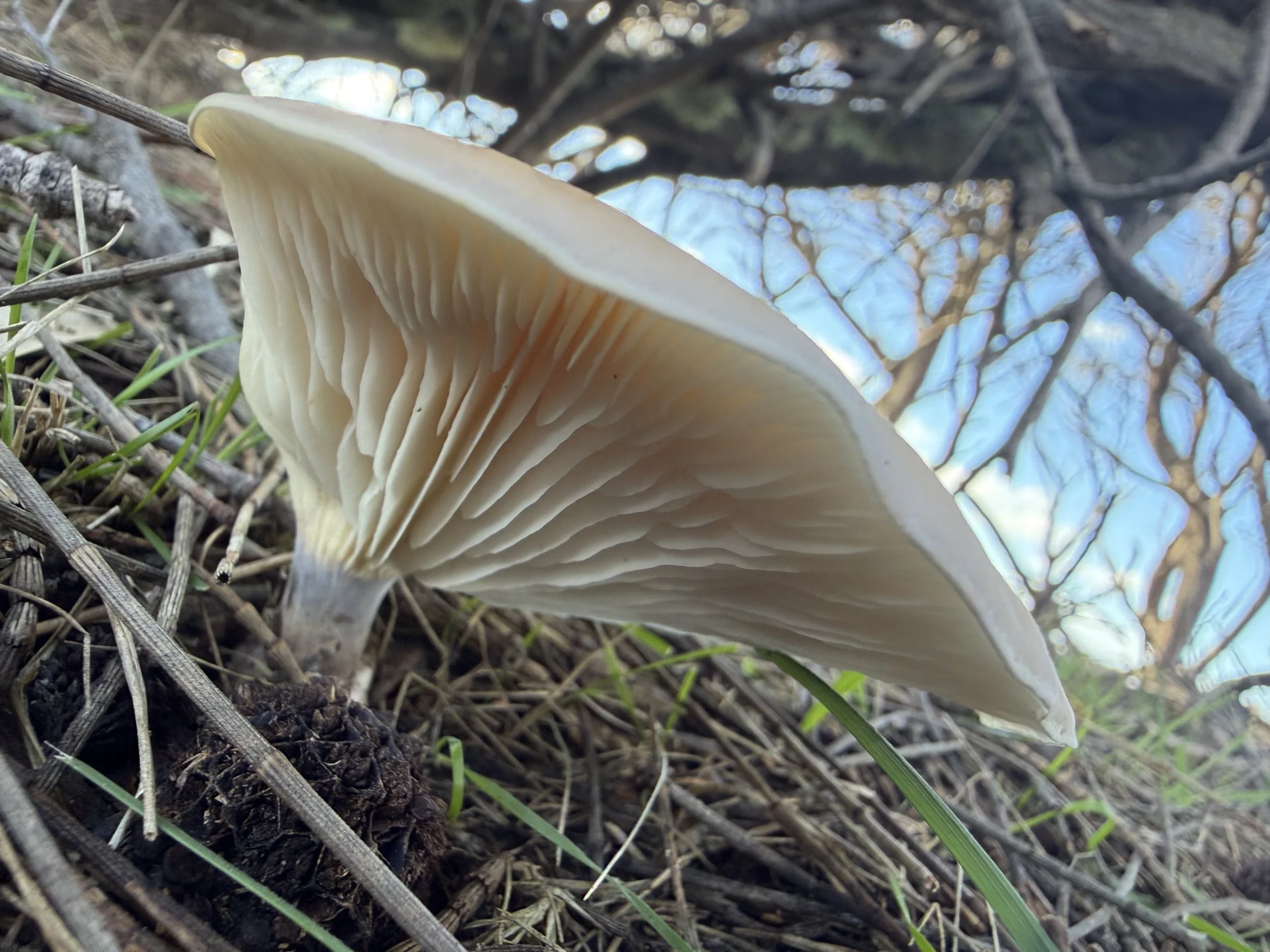
The gills of what I think is a ghost fungi.
I must admit something.
When I am alone on days like these, I often speak out loud to the fungi, the lichens and the mosses.
I think they rather enjoy being delighted in.
Behind a picnic table, sheltered beneath shrubs where the air held a little more moisture, another discovery waited. Cushions of moss surrounded a patch of bright green liverworts. I hadn't expected to find them so close to the coast, exposed to salt air and persistent wind. Yet there they were, their tiny gemma cups holding vivid green propagules ready for rain to carry them into new places.
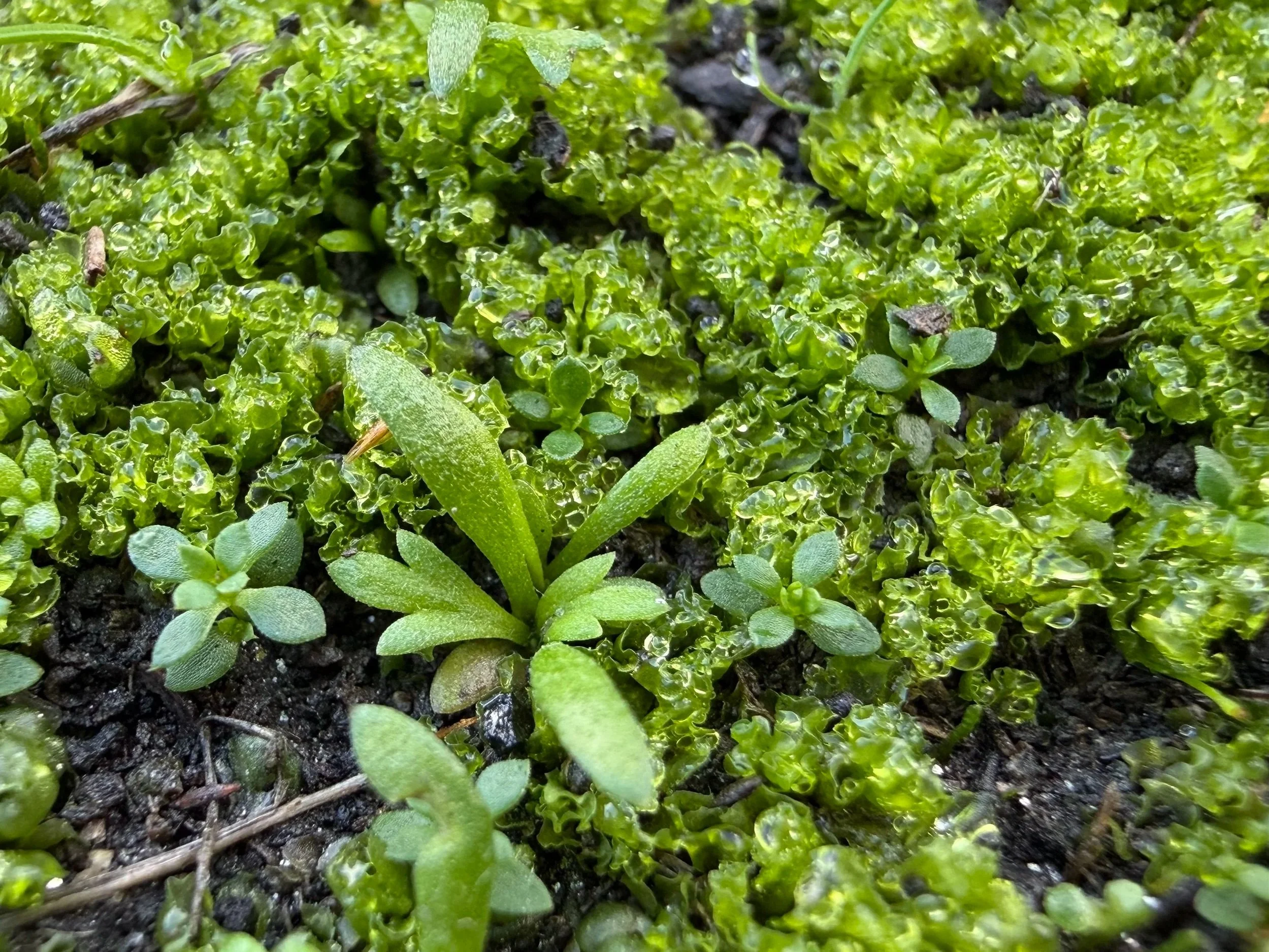
Mosses behind the picnic table.
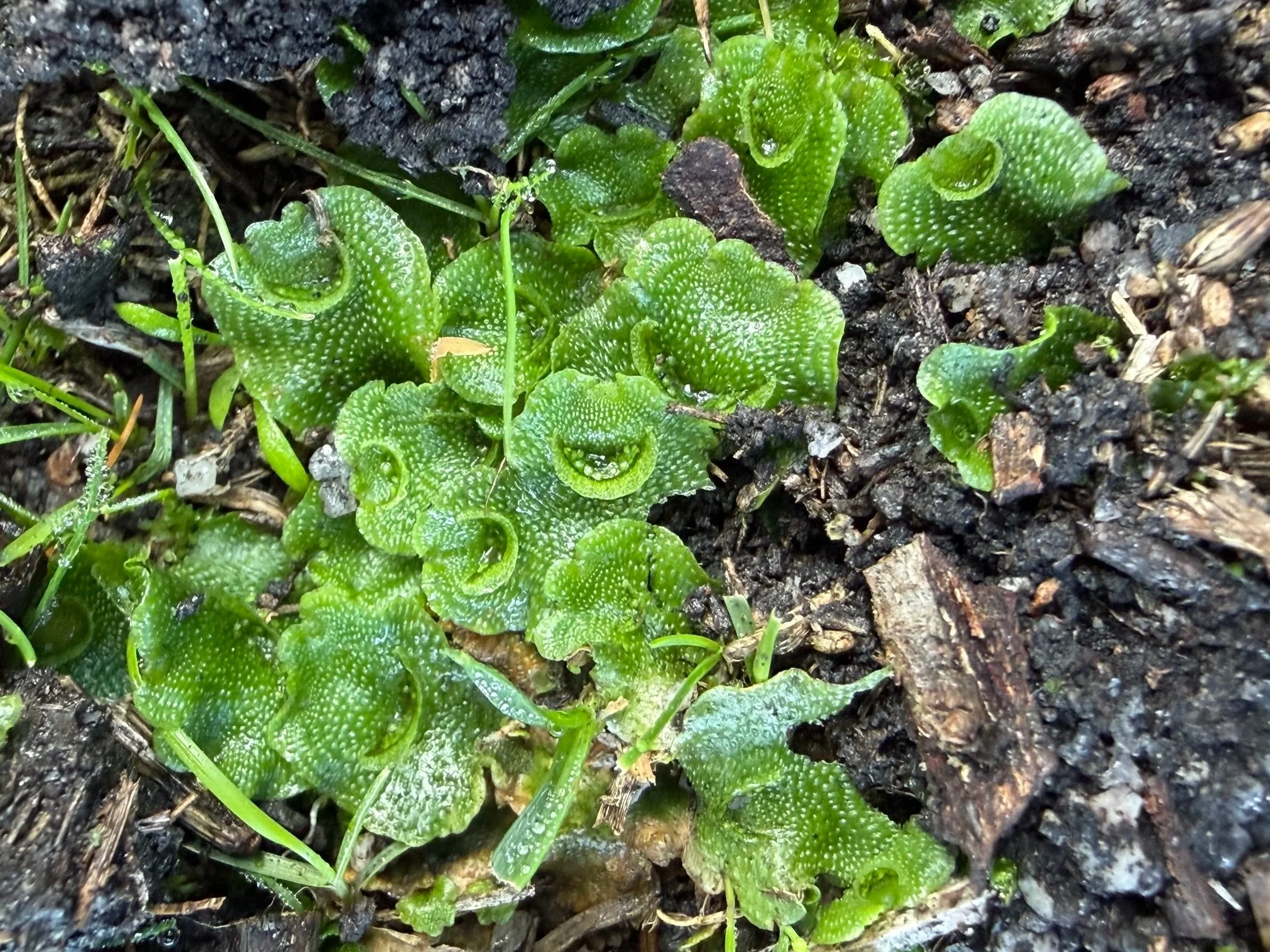
Liverworts with their gemma cups holding bright green propagules.
Another quiet reminder that life finds ways to flourish where we least expect it.
Eventually Pippa looked back at me with that unmistakable expression that says, "Time to keep moving." She trotted confidently up the track and, once again, I followed.
As we drove home, I realised it wasn't the photographs or the specimens that stayed with me. It was the feeling of delight. The simple joy of discovering one small organism after another until my whole attention had shifted.
I left feeling different—lighter, refreshed, more awake.
It makes me wonder how often we deny ourselves this kind of encounter. How easily we remain indoors, confined by walls and routines, while entire worlds quietly wait just beyond the track, asking only that we slow down enough to notice.
Perhaps paying attention is not simply a way of observing nature.
Perhaps it is one way that nature restores us.