
Origin
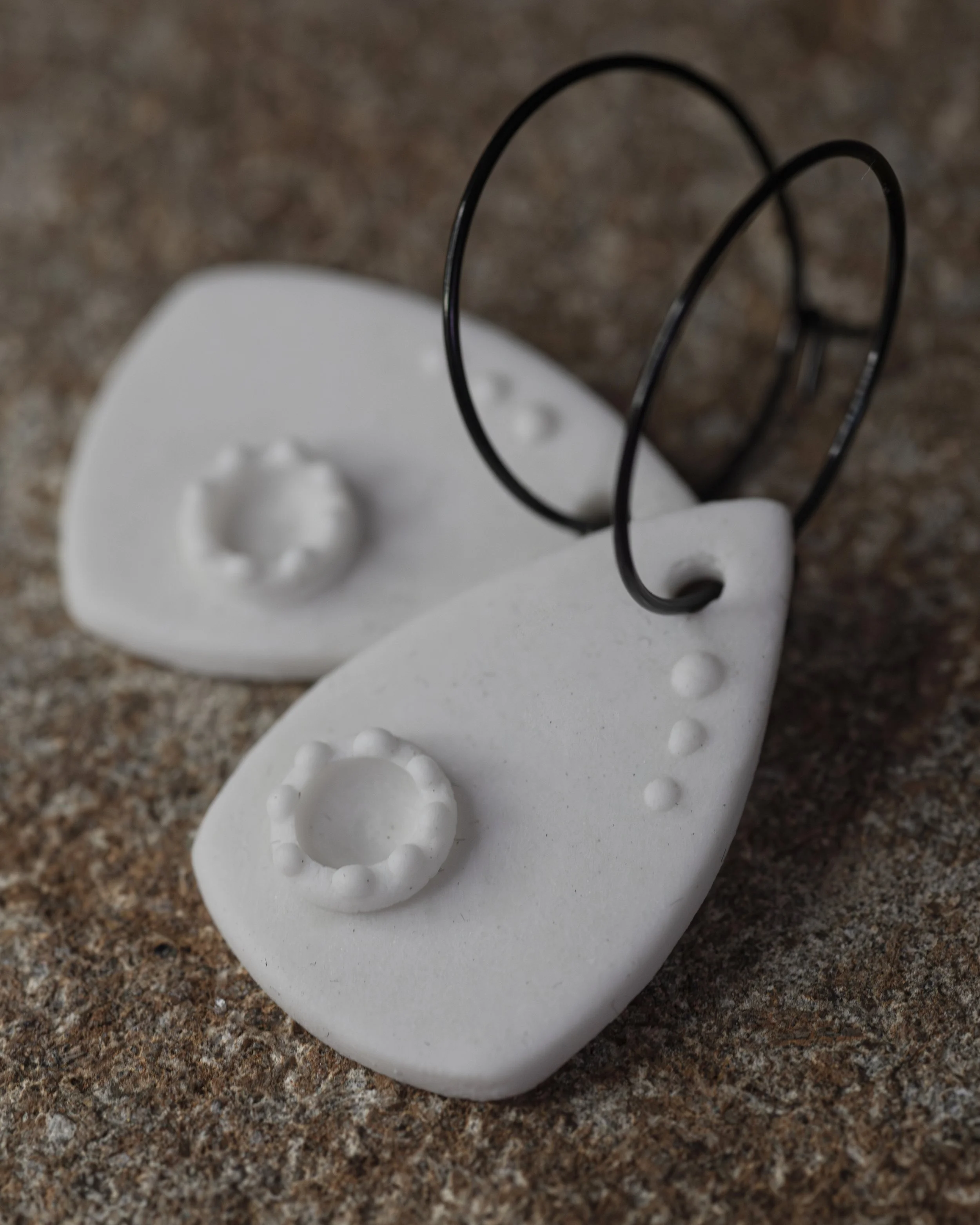
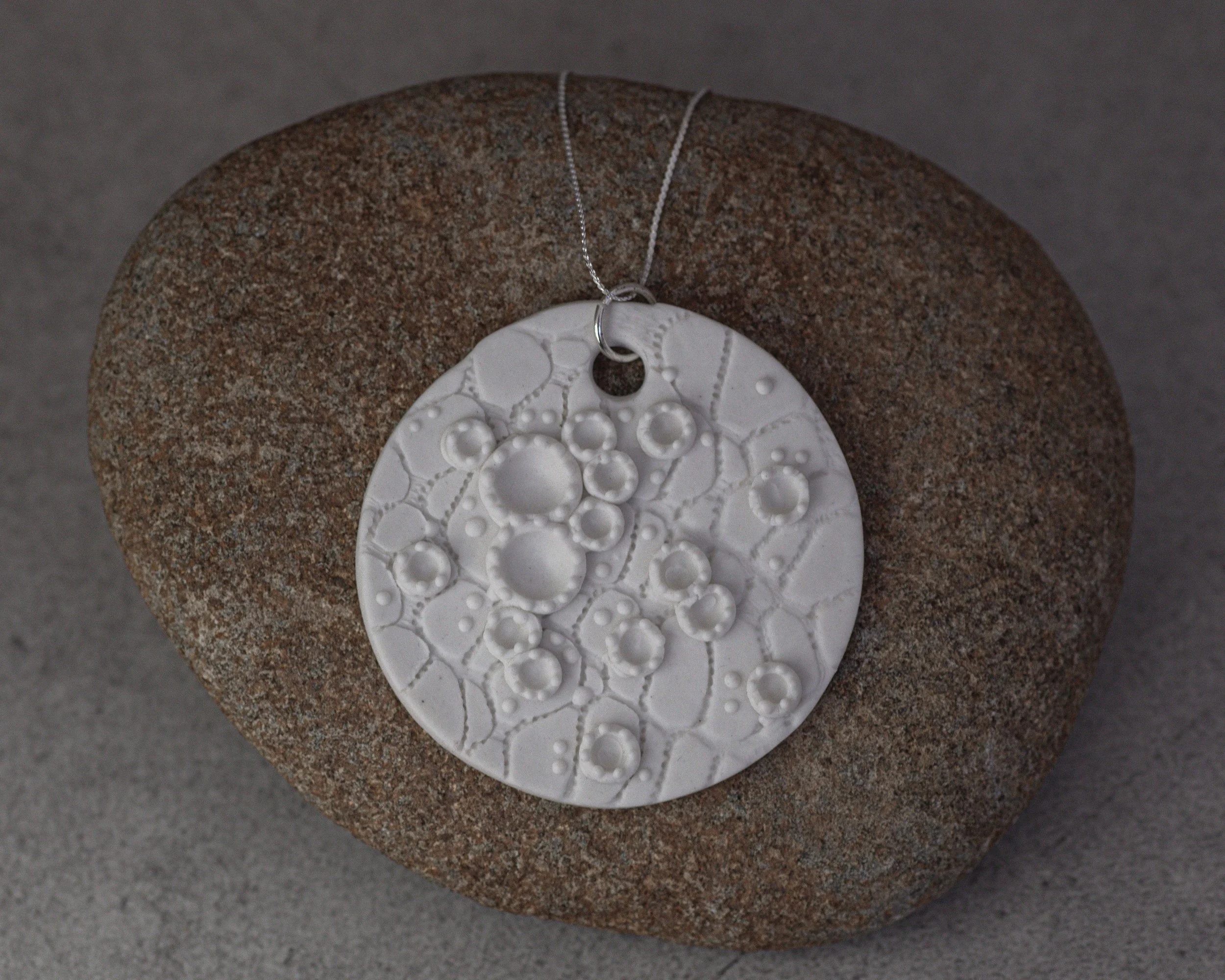
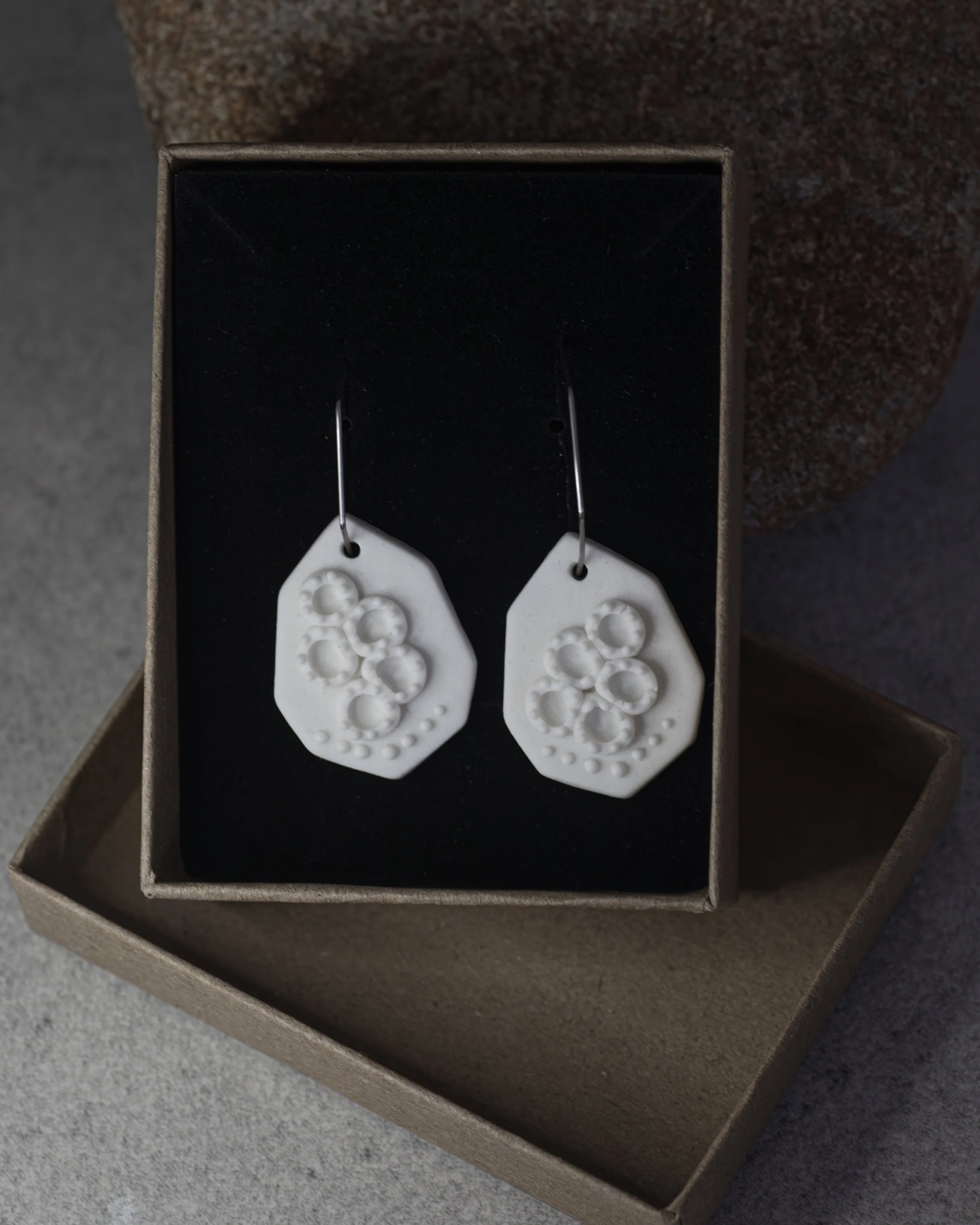
Named for Pella — a small township in Victoria where my great-grandfather built a limestone church — this porcelain collection continues a generational dialogue with earth. On both sides of my family, there is a lineage of makers: stonemasons working with weight, structure, and permanence. PELLA extends this inheritance — shifting from architecture to porcelain, from building at scale to shaping form for the body.
Surfaces echo weathered rock faces and subtle lichen topographies. Edges soften. Planes shift. Each form is composed to hold presence at a small scale — like a fragment of landscape carried on the body.
Stone remembered. Translated for the body.
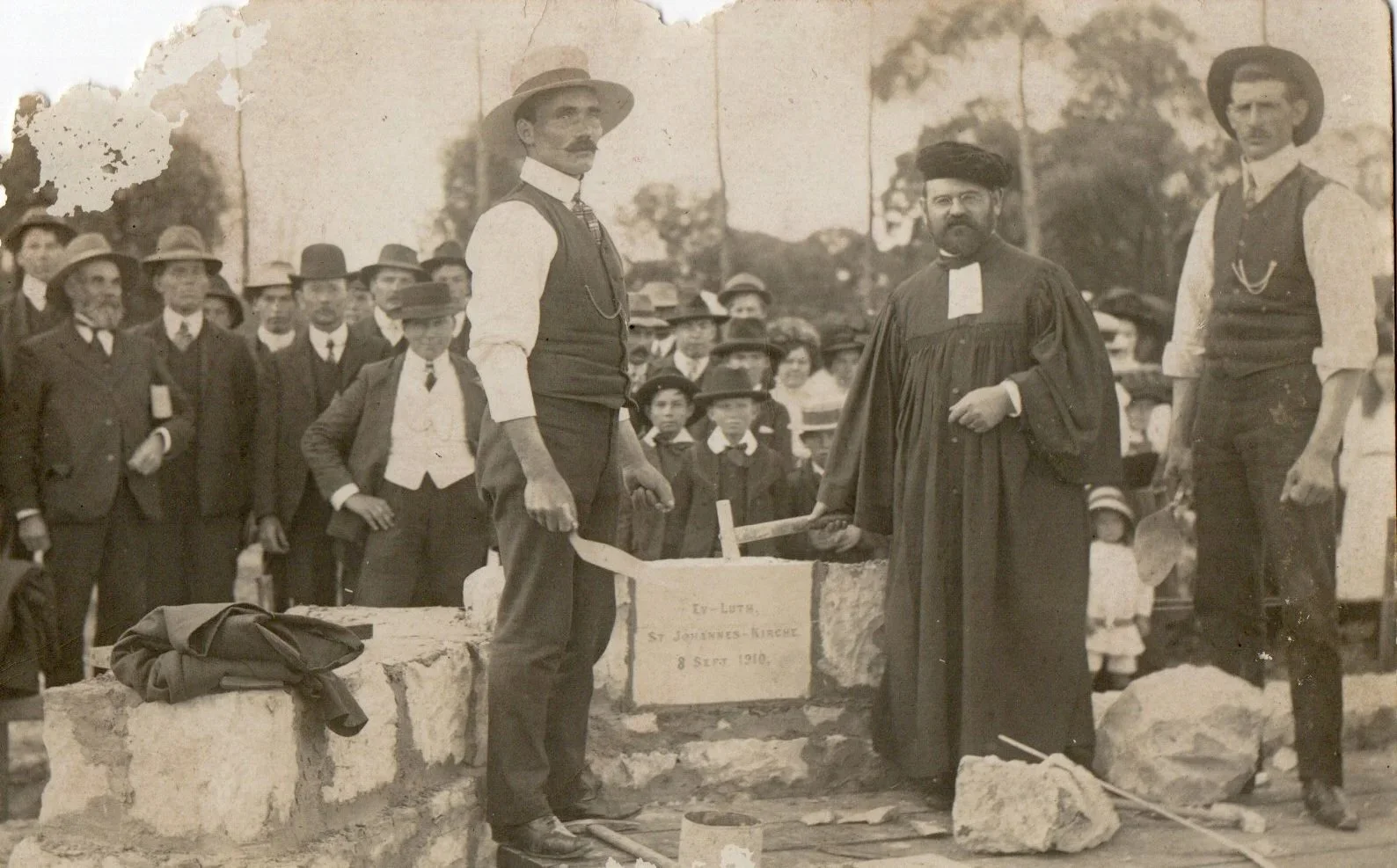
My great-grandfather, Stonemason, Harry Lange (right) laying the foundation stone at Pella, Victoria (1910).
The Maker
There is an image of my great-grandfather, Harry, at the laying of the foundation stone — positioned within the early stages of the structure he helped bring into being. Stone is set into place, marking a beginning, each piece carrying weight, intention, and permanence. That way of working — attentive, deliberate, in conversation with material — continues here. Though the scale has shifted, the impulse remains the same: to shape something enduring from the earth, and to make with a sense of time held within the form.
Built by Hand
This house was built by Harry for his wife, Clara, when they married — each brick formed by hand, made on site, shaped through labour and care. Modest in scale, it holds a deep understanding of material and structure, its stonework laid with precision and permanence.
It carried a family within it — a life shaped by necessity, resilience, and making. What remains is not only the structure itself, but a way of working: to build with what is available, to endure, and to create something lasting from the ground beneath you.
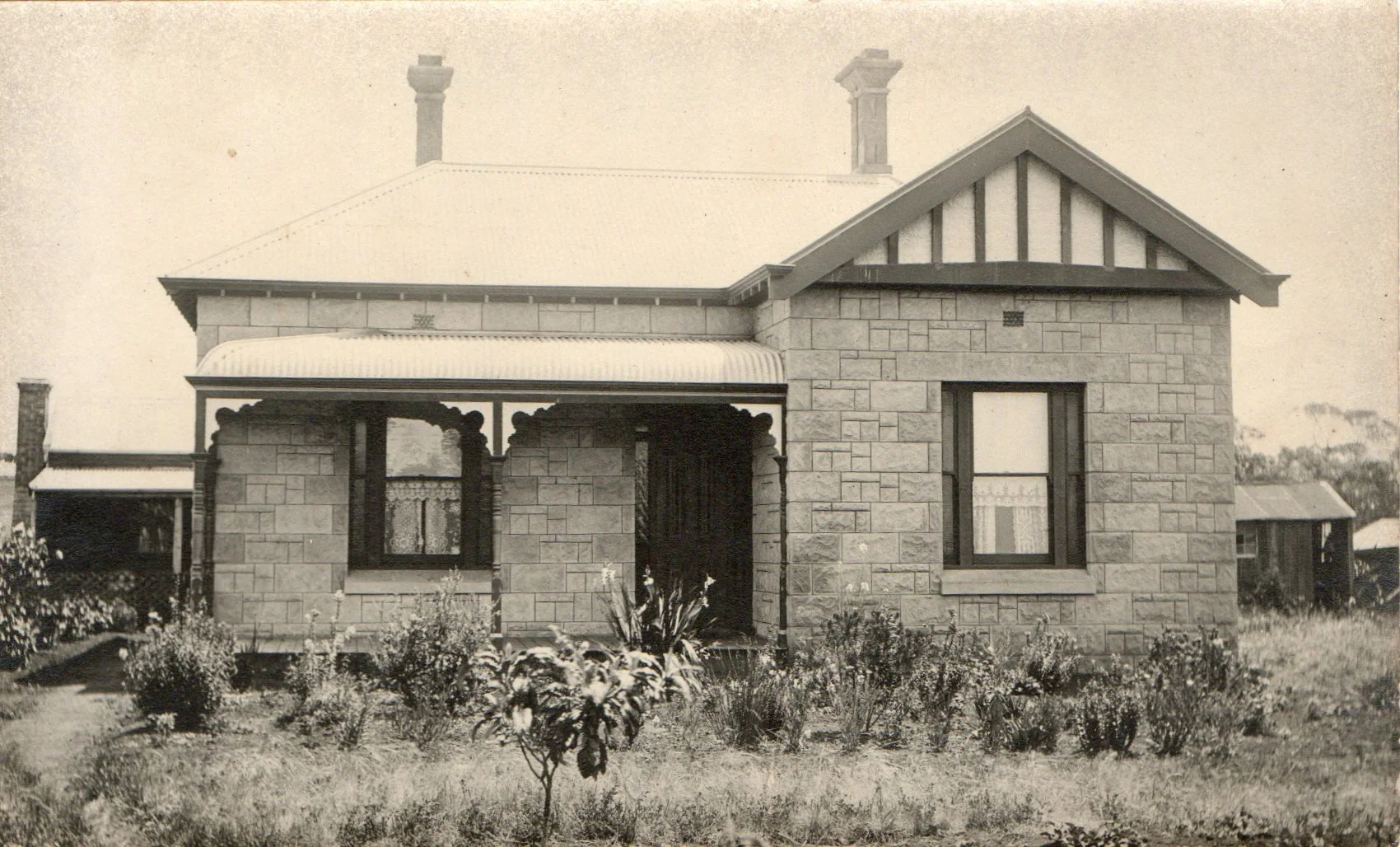
House built by Harry Lange for his wife Clara, Tarrington, Victoria.
The Life Around the Work
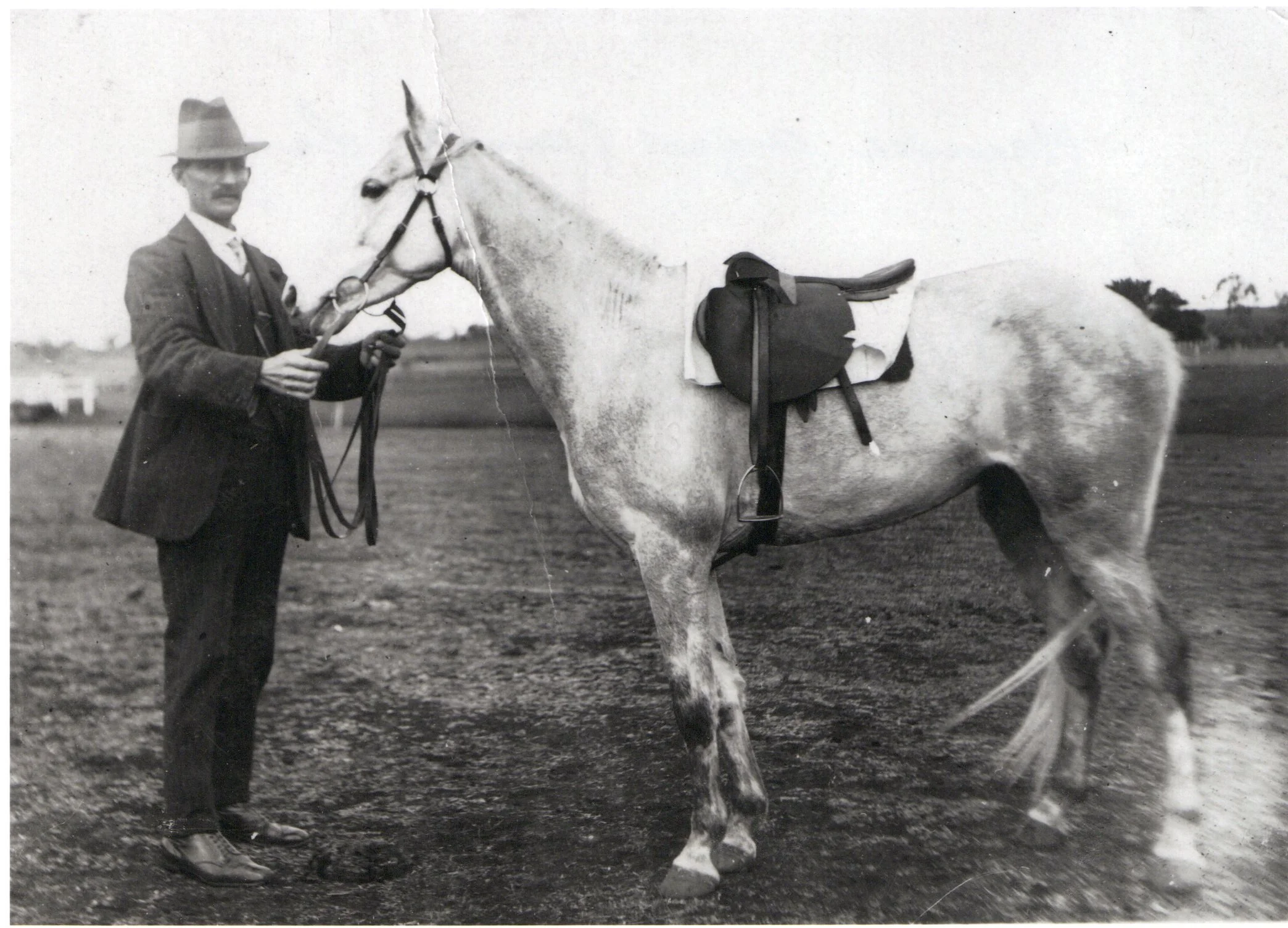
Beyond the structures he built, there was a life shaped by the rhythms of land and labour. This image of Harry with his horse speaks to a quieter, everyday presence — a relationship to place that extends beyond the act of building. It suggests a life lived in close connection with material, land, and movement, where making was not separate from living, but embedded within it.
Harry Lange with his horse, Victoria.
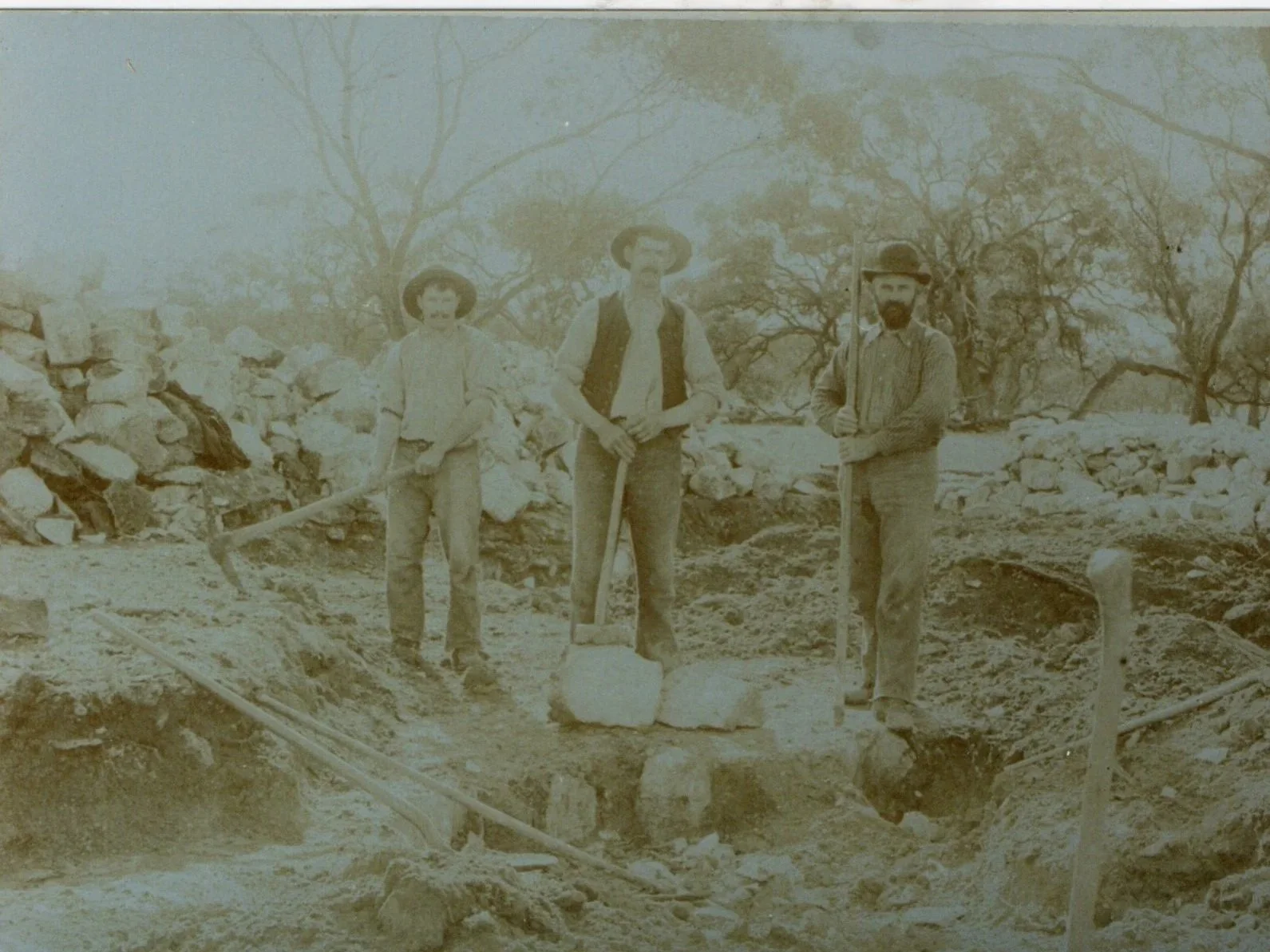
Harry Lange (centre) and his fellow limestone quarry workers, Victoria.
Through Fire
They worked in limestone pits, quarrying stone from the ground — cutting, lifting, and shaping material at its source. These sites were places of labour and transformation, where raw earth was prepared for building.
From quarry to kiln, stone was subjected to sustained heat, altering its structure and purpose. It was a process of extraction, fire, and change — material transformed into something capable of holding form and permanence.
That same sequence continues here. Clay, too, is shaped, then resolved through fire — its final state determined not only by the hand, but by what occurs within the kiln.
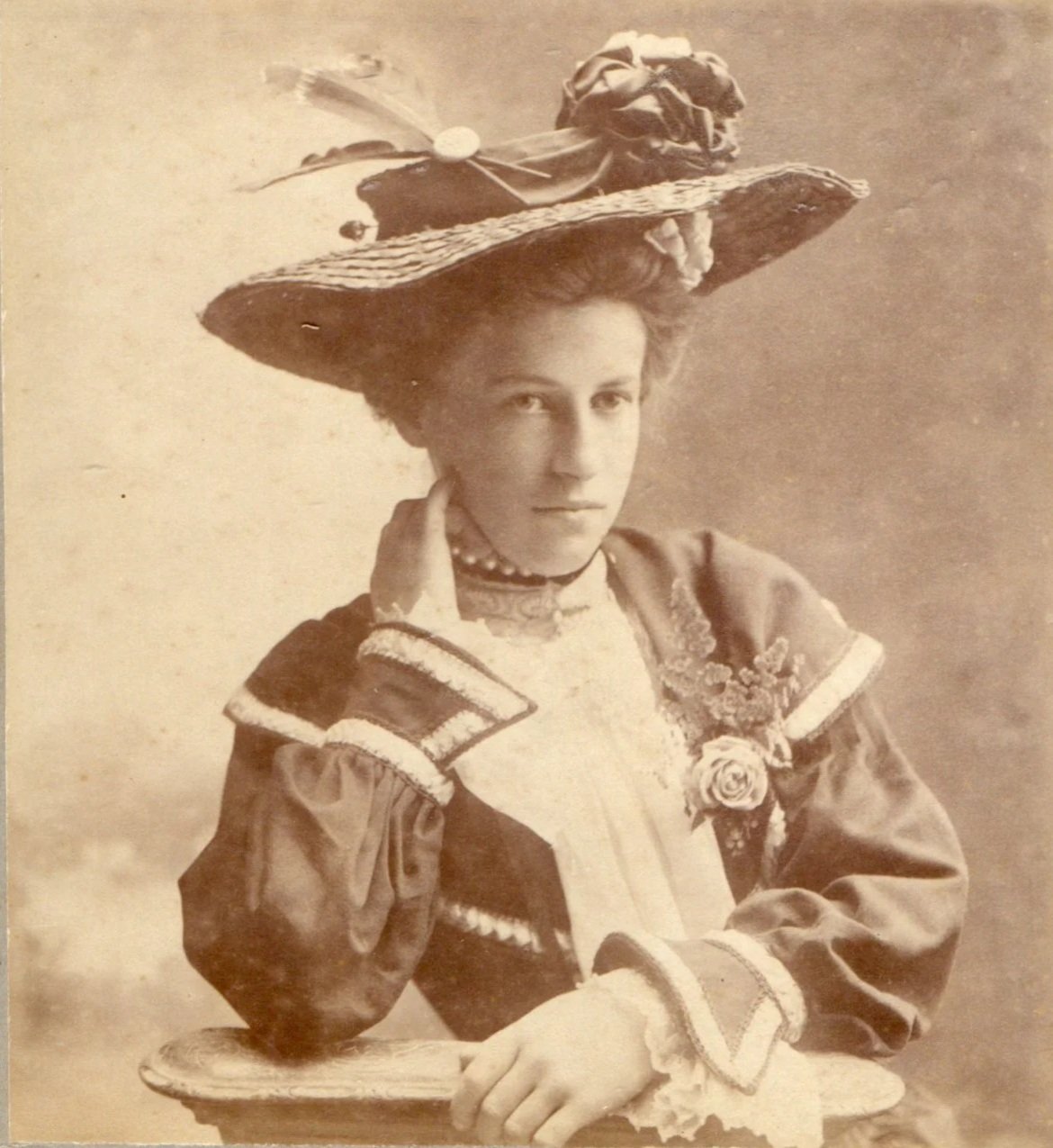
My great grandmother, Clara Lange.
Clara
Clara sits within this story as both presence and anchor — the reason for the home, the life built alongside the work. While the structures speak to labour and permanence, this image holds something quieter: care, refinement, and the interior world that exists alongside making.
Together, these histories form a broader understanding of what it means to build — not only in stone, but in life.
What began in stone continues in porcelain.
Each piece is formed, carved, and resolved through fire — carrying forward a material language of structure, surface, and endurance at an intimate scale. PELLA extends this lineage into objects worn on the body, where architecture is reduced, refined, and held close.
Their attention to detail and commitment to quality truly stood out. We’ve already recommended them to others.
—Former Customer