
PELL▲ | Material lineage, making, and knowledge held in the hand.
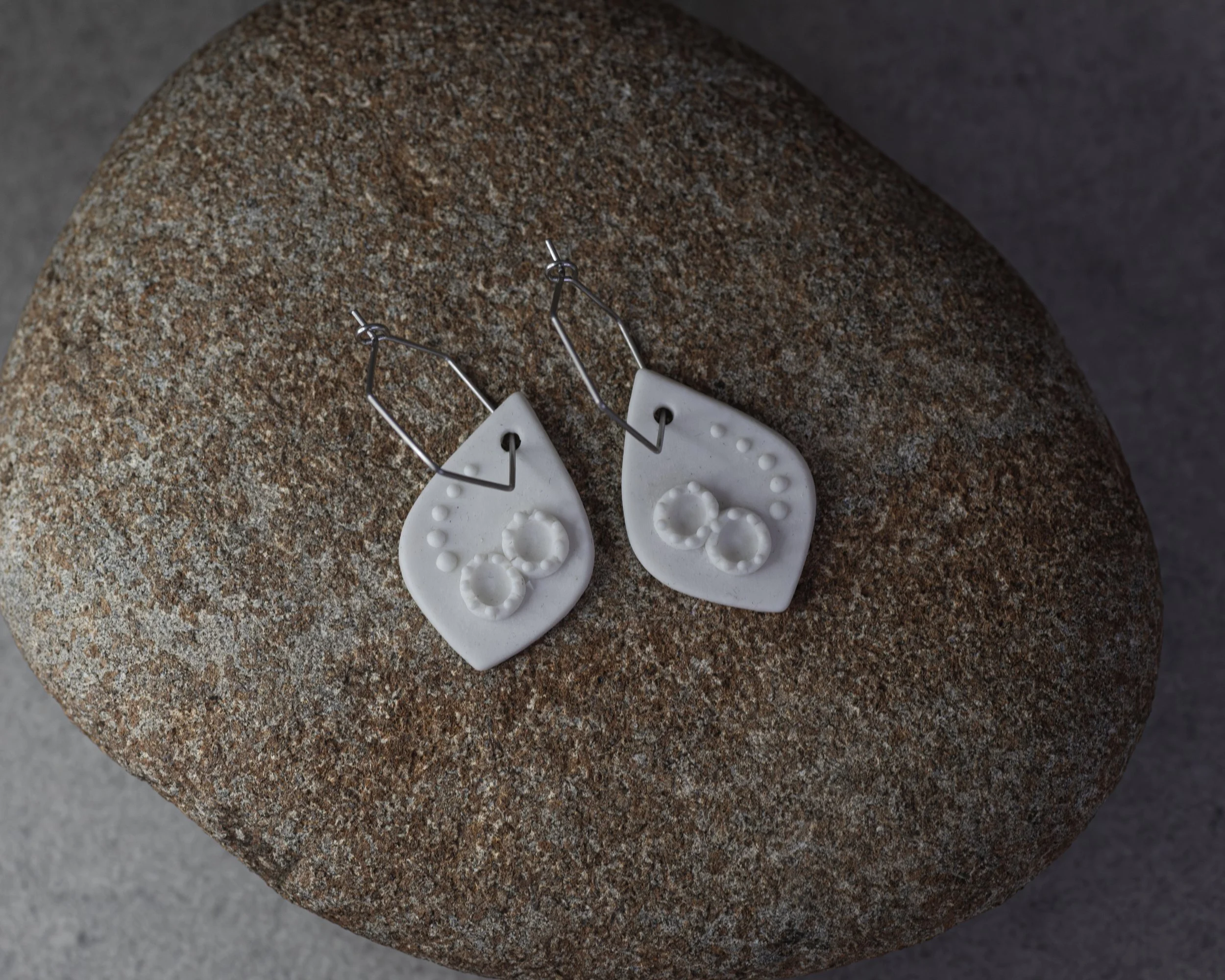
FOUNDATION Hoops No. 19
The Origin of PELL▲
Names do not always arrive fully formed.
Sometimes they emerge slowly, revealing themselves over time. Sometimes they sit quietly beneath the surface of a practice, waiting until there is enough understanding to recognise what has been there all along.
PELL▲ emerged in this way.
When I began developing this body of work, I spent a great deal of time searching for a name. I filled pages with words, ideas, references, materials, landscapes, and histories. I wanted a name that could hold more than jewellery. A name that could carry the values embedded in the work itself and provide a foundation for the collections I hope to bring to life in the years ahead.
Nothing felt quite right.
Then I remembered the name PELLA.
PELLA means stone or rock. When I discovered its meaning, it felt as though several threads suddenly converged. Stone has long been present within my family history through generations of stonemasons and builders, while Pella itself is also the name of the small Victorian settlement where my great-grandfather Harry built a limestone church by hand. The name seemed to hold both material and memory, connecting family, place, and making in a single word.
The more I explored the name, the more it felt less like a choice and more like a discovery.
What began as a search for a name gradually became something else. A return to ideas and values that had been quietly shaping me long before I ever considered making jewellery.
The name PELL▲ carries a lineage of making that stretches back through generations of my family.
When I look back across my family history, I see a kind of human ecosystem of makers. Across both sides of my family are people who worked with their hands: stonemasons, farmers, orchardists, instrument makers, musicians, seamstresses, cooks, and makers of all kinds. Different materials, different skills, different lives, yet many of the same values.
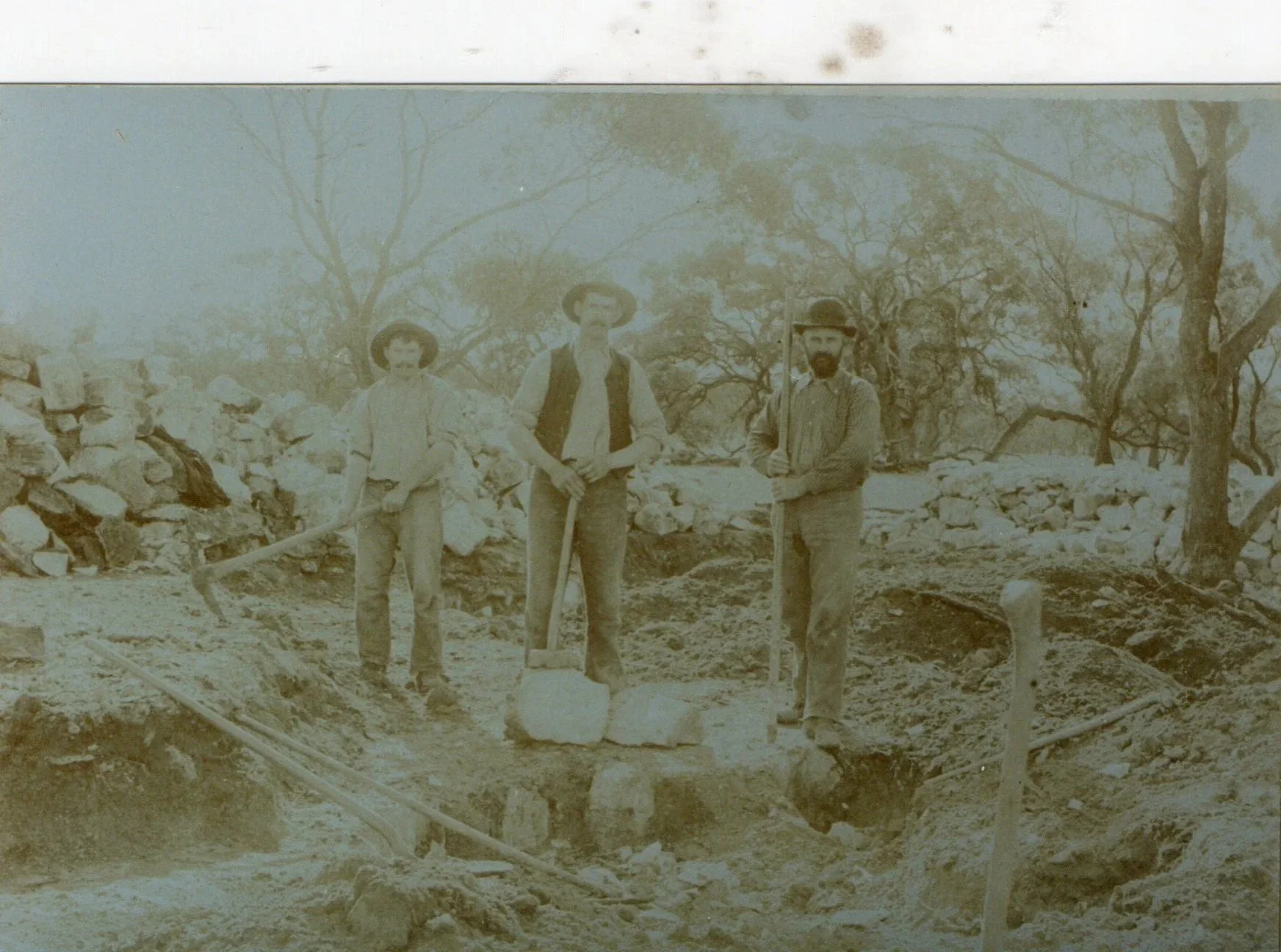
Harry Lange (centre) at the Limestone Quarry, Pella, Victoria. (Circa 1910)
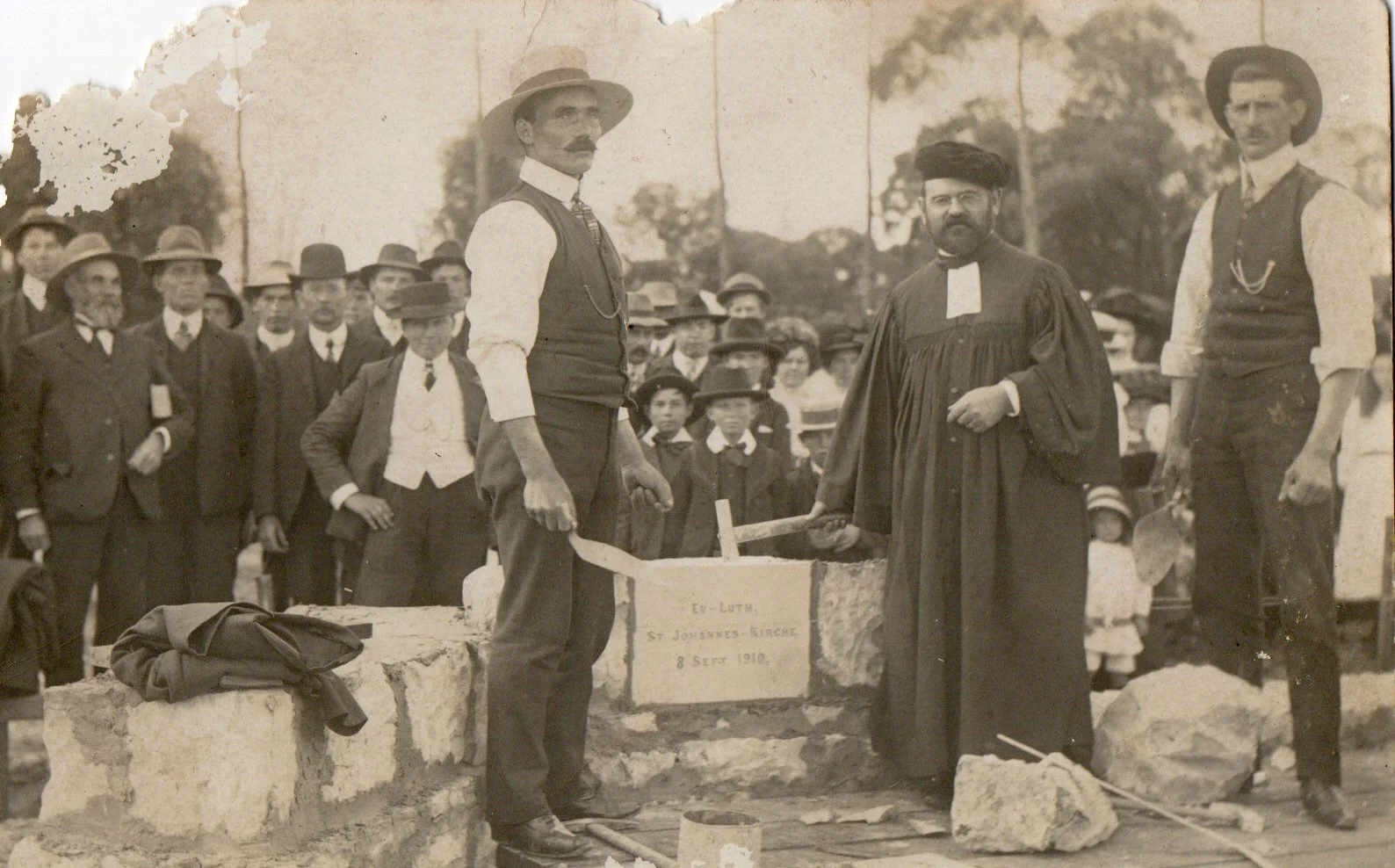
Harry Lange (right) at the laying of the Foundation Stone at Pella, Victoria. (1910)
Stone runs deeply through this history. My great-grandfather Harry (who always wore his hat on the back of his head) built a limestone church in the small settlement of Pella in Victoria's Mallee region, shaping local stone into a building designed to endure. A few years ago, that same church was granted heritage status, ensuring it will be protected for generations to come. There is something quite moving about that lineage of making—a structure built by hand still standing more than a century later, carrying both memory and meaning forward through time.
On my mother's side, stonemasonry appears again through my great-uncle, who worked on the stone of the Australian War Memorial in Canberra, a place where material, memory, and craftsmanship come together in service of collective remembrance.
There were also farmers and orchardists whose lives were shaped by weather, season, soil, and long cycles of care. They understood that growth cannot be rushed and that good outcomes often emerge through patience, observation, and responsiveness rather than force.
My mother's side also carries a tradition of instrument making and music. My great-grandfather crafted violins and violas, objects requiring precision, sensitivity, and a deep understanding of material. Music itself is a practice built through repetition, attentiveness, and refinement—qualities that feel familiar in the studio.
Alongside these histories were the women of the family. Women who worked the fields, prepared feasts, preserved seasonal harvests, made and mended clothing, raised children, and sustained households through countless acts of care. Their labour was no less skilled. Their knowledge lived in the hand, in repetition, observation, resourcefulness, and in the quiet understanding of how to tend, repair, and sustain.
Though these histories are varied, they are interconnected. Together they form a network of knowledge, skill, labour, and care that has been passed from one generation to the next. Whether working with stone, timber, soil, fruit trees, fabric, food, or music, they share a respect for materials, an appreciation for skilled labour, and the belief that worthwhile things take time.
The more I reflected on these histories, the more I realised that PELL▲ was not simply a name for a jewellery collection. It described something fundamental about the way I understand making.
The triangular form held within the name became important too. It suggests stone, mountain, structure, and foundation. It also reflects the transformation that occurs in the kiln, where porcelain moves beyond clay and becomes something closer to stone through vitrification.
This relationship to material sits at the heart of the collection.
Jewellery is often thought of as adornment, but I approach these pieces as small sculptures for the body. Each form begins by hand and is shaped through a process of testing, refinement, and repetition. Decisions about proportion, balance, weight, surface, and touch are resolved at an intimate scale, where even the smallest adjustment can alter the character of a piece.
Porcelain became the natural material through which these ideas could be explored. It holds a tension between fragility and strength. It demands both control and responsiveness. It records the hand while asking the maker to remain attentive to its own tendencies and limitations.
In many ways, PELL▲ extends the same concerns that exist throughout my sculptural practice. The materials have changed scale, but the underlying questions remain similar. How do we work with materials rather than against them? How do we create objects that invite attention? How do we make things that carry meaning through form, process, and care?
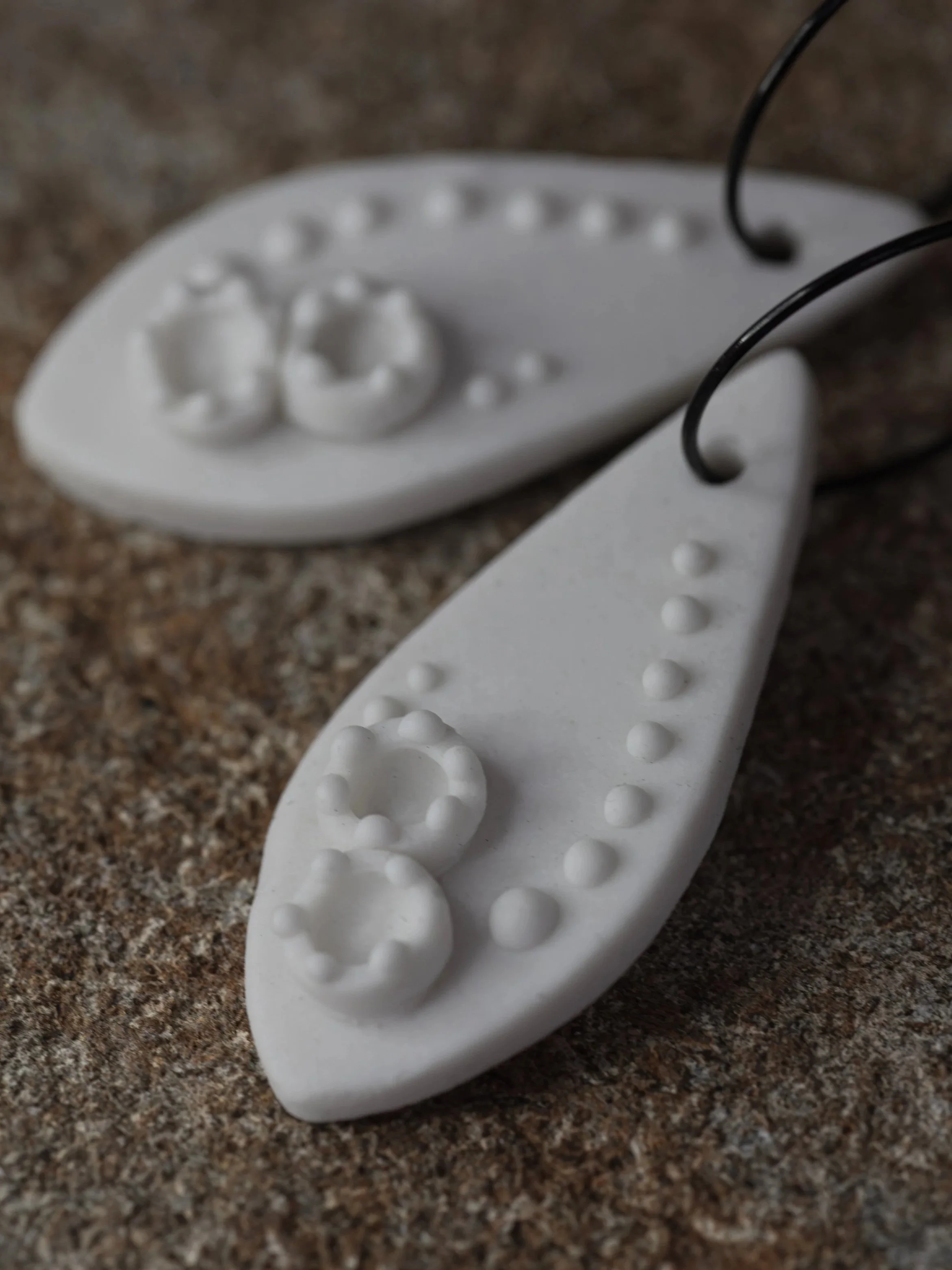
FOUNDATION Hoops No. 14
FOUNDATION, the first PELL▲ collection, is exactly that: a beginning. A base collection from which future bodies of work will grow. Like much of my practice, it is being built slowly, allowing ideas, materials, and forms to evolve over time.
Reflecting on the people who came before me has also made me think about the kinds of objects we choose to make, keep, and value. Many of them worked in ways that stood in opposition to disposability. They built structures intended to endure. They repaired rather than replaced. They cultivated orchards that would produce fruit for decades. They made garments, preserved harvests, crafted instruments, and cared for objects through long use.
While PELL▲ exists in a very different time and context, those values continue to resonate. In an era shaped by fast fashion and constant consumption, I find myself drawn to a slower approach that values craftsmanship over convenience, longevity over novelty, and meaningful connection over accumulation.
My hope is that PELL▲ finds its way to people who share those values; people who choose fewer things, better made, and who are drawn to objects with a story, objects that feel considered, and objects they keep. Not because they are fashionable for a season, but because they continue to hold meaning over time.
Looking back now, it feels as though the name was waiting patiently to be discovered. Not as an invention, but as a continuation. A meeting point between family history, material knowledge, and contemporary making, brought together through porcelain forms shaped for the body.
PELL▲ is grounded in that inheritance—a meeting point between family history, material knowledge, and contemporary making, brought together through porcelain forms shaped for the body.